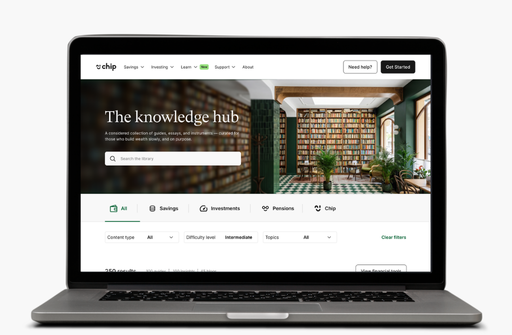
The knowledge hub

A considered collection of guides, essays, and instruments — curated for those who build wealth slowly, and on purpose.

0
results
View tools
Filter results
Filter by:
Content type
Difficulty level
Topics
0
results
View financial tools

Understanding the Base Rate

2 min read
Beginner
Rates, Tax & Economics

The Bank of England Base Rate, also known as Bank Rate, holds significant influence over the UK's financial landscape, impacting borrowing costs, mortgage rates, and savings interest. 

It's important to understand the Bank of England Base Rate and how it affects your financial decisions. In this guide, we'll explain what the Bank of England Base Rate is, how it influences interest rates, its impact on the economy, and why it plays a role in influencing spending and inflation.

What are Interest Rates?

Interest rates refer to the percentage charged or earned on borrowed money or invested funds. 

Lenders charge interest on loans as compensation for the risk and opportunity cost of lending money, while savers earn interest on their deposits as a reward for entrusting their funds to financial institutions. Learn more about interest rates.

What is the Bank Rate?

Bank Rate, often referred to as the Bank of England Base Rate, is the key interest rate set by the Bank of England. It acts as a tool for controlling inflation and stabilising the economy. 

The Bank of England assesses economic conditions and adjusts Bank Rate accordingly to support the government's inflation target and ensure economic stability.

How Bank Rate Affects Your Interest Rates:

Changes in Bank Rate have a ripple effect on various interest rates throughout the economy. Here's how it influences your financial decisions:

  • Mortgage rates: Bank Rate influences the cost of borrowing for banks, impacting the interest rates they offer on mortgages. When Bank Rate rises, mortgage rates tend to increase, making borrowing more expensive. When Bank Rate decreases, mortgage rates may go down, providing potential savings for homeowners.
  • Savings interest rates: Bank Rate also affects the interest rates offered on savings accounts. Higher Bank Rates generally result in higher savings interest rates, potentially increasing the returns on your savings. Lower Bank Rates may lead to reduced savings interest rates.

How Changes in Bank Rate Affect the Economy:

Changes in Bank Rate have a significant impact on the broader economy. Here are some key effects:

  1. Borrowing costs: Changes in Bank Rate directly influence the cost of borrowing for individuals, businesses, and financial institutions. Higher rates increase borrowing costs, potentially curbing spending and investment. Lower rates encourage borrowing and stimulate economic activity.
  2. Inflation: Bank Rate plays a crucial role in managing inflation. When inflation is rising, the Bank of England may increase Bank Rate to reduce spending and control price increases. During economic downturns, lowering Bank Rate can encourage borrowing and spending, boosting economic activity.

Why Does Bank Rate Influence Spending and Inflation?

Bank Rate influences spending and inflation primarily through its impact on borrowing costs. When borrowing becomes more expensive due to higher interest rates, individuals and businesses may reduce their spending, leading to a potential slowdown in economic activity and inflation.

Lower interest rates make borrowing cheaper, encouraging spending, investment, and economic growth. How do interest rates affect inflation? 

Bank Rate Summary

Understanding the Bank of England Base Rate is crucial for making informed financial decisions in the UK. The rate directly affects interest rates on mortgages and savings, impacting borrowing costs and potential returns. 

Changes in Bank Rate have far-reaching effects on the broader economy, influencing spending, investment, and inflation levels.

Mind over money: How to overcome savings procrastination

2 min read
Intermediate
Money Mindset & Lifestyle

We all know that saving is important, yet for many, actually doing it can feel like an uphill battle. Why is it so hard to set aside money, even when we know it’s in our best interest?

To get to the bottom of this oft-experienced conundrum, let’s explore the psychological reasons behind savings procrastination and look at evidence-backed ways to conquer it.

Present bias: The now vs. later dilemma

At the root of savings procrastination lies a cognitive quirk known as present bias, which causes us to prioritise immediate rewards over long-term gains, even when the latter are objectively better.

This is why many of us would rather have £100 today than £120 in a year, despite the fact that waiting would yield more value. Present bias tricks our brain into opting for immediate spending, undermining our ability to save for future goals.

A classic illustration of present bias is the famous Stanford marshmallow test. Conducted in the 1970s by psychologist Walter Mischel, the experiment offered children a choice: eat one marshmallow now, or wait 15 minutes and receive two marshmallows instead.

The test revealed a lot about self-control and delayed gratification. Some children managed to wait for the second marshmallow, while others quickly gave in to the temptation.

Interestingly, follow-up studies found that the children who were able to wait for the second marshmallow tended to achieve better life outcomes, including higher academic achievement and greater financial success.

This experiment encapsulates how present bias works in real life. When faced with the choice of spending or saving, some of us act like the children who opted for immediate gratification, preferring money now, even though we know we could benefit more by saving for the future.

Understanding this bias can help us recognise why we struggle with saving and give us the insight we need to build better financial habits.

Loss aversion

It is natural for us to experience what’s known as loss aversion, where the pain of losing money feels stronger than the pleasure of gaining it. When we save, it may feel like we’re sacrificing our current spending power, even though we’re setting ourselves up for future financial security.

Choice overload

With so many savings options out there—ISAs, pensions, investments—it’s easy to become overwhelmed and opt, instead, for doing nothing at all. Choice overload can create decision paralysis, stopping us from taking any meaningful action toward saving.

Optimism bias

Another common mental block is optimism bias. This is where we overestimate how well things are liable to go in the future.

We might assume that, as soon as we get that promised raise, it’ll be the perfect time to start saving, or to think that a future version of yourself will be better placed to handle difficult financial decisions, which can lead to continuous delays.

Evidence-based strategies to combat saving apathy

Understanding the psychology behind why we put off saving is only half the battle. To make the most of your money, it’s key to apply practical strategies that will break through these barriers.

1. Embrace automation

One of the most effective ways to beat procrastination is to remove the element of choice altogether. Set up automatic transfers to move a portion of your income to a savings account on payday.

2. Visualise your future self

Research shows that vividly imagining your future self can help counteract present bias. By creating a mental connection with your future self, you’re more likely to make decisions that benefit you in the long run.

3. Start small

Large, long-term financial goals can feel overwhelming. To combat this, use the goal-gradient hypothesis, which shows that people are more motivated when they see progress toward their goal. Start with small, achievable savings targets to build momentum.

4. Use mental accounting

Take advantage of mental accounting, a tendency to mentally separate funds for specific purposes. By creating separate savings accounts or "pots" for different goals, you reduce the likelihood of dipping into your savings.

5. Make saving tangible

Using visual feedback can make the abstract concept of saving feel more real. Tracking your savings progress visually can provide immediate rewards and encourage consistent contributions.

7. Simplify your choices

If you’re overwhelmed by myriad savings options, streamline your choices to reduce cognitive overload. Start with just one or two savings accounts or products to get the ball rolling. You can diversify later as your savings grow.

Building a path to financial wellness

The key to overcoming savings procrastination is to focus on progress, not perfection.

Each small step you take toward saving, no matter how small, is a win. Celebrate your achievements along the way and be patient with yourself as you form new habits.

By understanding the psychological forces behind procrastination and using these strategies, you’re not just building better savings habits, you’re changing your relationship with money.

This shift in mindset can make a world of difference in your financial future.

When does the Bank of England base rate change?

2 min read
Intermediate
Rates, Tax & Economics

The Bank of England base rate, often referred to as the "Bank Rate," is a critical component of the UK’s financial system, influencing everything from savings and mortgage rates to the broader economy.

Understanding when and why the base rate changes can help you make informed financial decisions.

Why the base rate is important

The Bank of England base rate is the interest rate at which commercial banks borrow from the central bank. It serves as a benchmark for interest rates across the economy, affecting lending and borrowing costs for consumers and businesses alike.

When the base rate changes, it can influence everything from mortgage repayments to savings interest rates and even the cost of borrowing for businesses.

Factors that influence base rate changes

The Monetary Policy Committee (MPC) of the Bank of England, which meets for three and a half days, eight times a year, is responsible for setting the base rate. Several factors influence decisions:

  1. Inflation: The primary goal of the MPC is to maintain price stability by targeting an inflation rate of 2%. If inflation is predicted to rise above this target, the MPC may increase the base rate to cool economic activity. Conversely, if inflation is below target, the base rate may be reduced to stimulate spending.
  2. Economic growth: The MPC also considers overall economic health. Indicators such as GDP growth, employment rates, and consumer spending can influence decisions. During periods of economic slowdown, a lower base rate can help encourage borrowing and investment.
  3. Global economic conditions: External economic factors, such as global financial markets and international trade dynamics, also play a role. Events like financial crises or significant changes in major economies can impact the UK’s economic outlook, prompting a reassessment of the base rate.
  4. Financial stability: Ensuring the stability of the financial system is another critical consideration. The MPC evaluates risks to the banking sector and broader financial system, adjusting the base rate to mitigate potential threats.

Who is in the MPC?

The MPC is composed of nine members. These members include the Governor of the Bank of England, three Deputy Governors, the Chief Economist, and four external members appointed by the Chancellor of the Exchequer.

The composition has been designed to ensure a balance of internal Bank of England officials and independent external experts.

When does the base rate change?

The Bank of England’s MPC meets eight times a year to review the base rate. These meetings are typically scheduled every six weeks, although extraordinary meetings can be called if economic conditions warrant immediate action.

The dates of these meetings are published in advance, allowing markets and the public to anticipate potential rate changes.

For the most accurate and up-to-date information, the Bank of England’s website provides a schedule of upcoming MPC meetings and announcements.

The impact of base rate changes

Changes to the base rate can have wide-reaching effects on various aspects of the economy and personal finance. These will affect people in different ways. A base rate change will always be greeted positively by some people and negatively by others. Key areas liable to be impacted by changes are:

  1. Mortgages: Many mortgage rates are linked to the base rate. A rise in the base rate often leads to higher mortgage payments for those on variable or tracker rates. Fixed-rate mortgages remain unaffected until the end of the term, at which point a new rate will be set. This rate will be based on the prevailing base rate.
  2. Savings: When the base rate increases, banks and building societies often raise interest rates on savings accounts, offering better returns to savers. Conversely, a reduction in the base rate can lead to lower savings interest rates.
  3. Loans and credit cards: Borrowing costs for personal loans and credit cards are also influenced by the base rate. Higher base rates can result in more expensive borrowing, while lower rates make loans and credit cheaper.
  4. Business loans: For businesses, changes in the base rate affect the cost of borrowing. Higher rates can increase operating costs, potentially impacting investment decisions and expansion plans.
  5. Currency exchange rates: The base rate can also influence the strength of the pound. Higher rates tend to attract foreign investment, boosting the currency’s value, while lower rates can have the opposite effect.

Preparing for base rate changes

Given the significant impact of base rate changes, it’s important to stay informed and prepared. Here are some steps you can take:

  1. Monitor MPC meetings: Keep track of the MPC’s meeting schedule and be aware of the dates when decisions will be announced. Reputable financial news outlets will often provide analysis and predictions ahead of (and in the wake of) these meetings.
  2. Review financial products: Regularly review your financial products, such as mortgages, savings accounts, and loans. Consider how base rate changes might impact your payments or returns, and explore options for fixed-rate products if you prefer stability.
  3. Seek professional advice: If you’re unsure how potential base rate changes might impact your finances, consider consulting with a financial advisor. They can provide personalised advice based on your specific circumstances.
  4. Stay flexible (where possible): Be prepared to adjust your financial plans in response to base rate changes. This might include refinancing a mortgage, switching savings accounts, or adjusting your investment strategy. It is generally recommended to speak to an expert prior to making any major financial decisions.

Conclusion

The Bank of England base rate plays a crucial role in the UK economy, influencing a wide range of financial products and decisions.

By understanding when and why the base rate changes, you can better prepare for its impacts on your personal and business finances.

Stay informed, review your financial products regularly, and seek professional advice to navigate the complexities of interest rate fluctuations effectively.

Working towards your financial milestones

2 min read
Intermediate
Savings Strategies & Tips

Climbing the property ladder

For many, buying their first home is a major achievement, but it’s rarely the “forever home.” As careers evolve and families grow, the need for a larger or different space often arises. Here’s how to successfully navigate moving up the property ladder:

Step 1: Assess your position
  • Home valuation: Get your home valued by at least three estate agents to ensure accuracy. Ask them to explain how they arrived at their figures.
  • Mortgage check: Review your current mortgage balance and term. Determine if it's portable if you have several years left.
  • Equity calculation: Decide whether to sell your current home or keep it as an investment. Calculate the equity you can leverage for your next property.
Step 2: Set your target
  • Define requirements: List what you want in your next home and prioritise your needs—e.g., is a south-facing garden more important than a new kitchen?
  • Research areas: Investigate property types and average prices in your desired locations, considering factors like proximity to transport and schools.
Step 3: Create your savings plan
  • Deposit target: Aim to save at least 20% of the new property's value for your deposit.
  • Budget for costs: Account for legal fees, stamp duty, and moving expenses. Always set aside a contingency fund for unforeseen repairs.
Step 4: Optimise your savings
  • Savings accounts: Utilise high-interest savings accounts or short-term  cash savings bonds.
  • Mortgage offset: Consider an offset mortgage to reduce interest payments and build equity faster.
Step 5: Boost your borrowing power
  • Credit score improvement: Regularly check and improve your credit score.
  • Overpayments: Consider overpaying on your current mortgage to increase equity.
Step 6: Time your move
  • Market awareness: Watch the property market and interest rates. The market tends to slow down in winter, which can be a good time to make offers.
  • Acting on opportunities: Be prepared to act when conditions are favourable.

Funding your child’s education

Education can be a significant financial commitment, whether you're covering private school fees, university costs, or extracurricular activities. Here’s how to effectively save for your child's education:

Step 1: Estimate the costs
  • Research fees: Investigate current and projected costs for schools and universities, factoring in annual increases of 3-5%.
Step 2: Set your timeframe
  • Funding timeline: Determine when you'll need the funds, whether it's for school in five years or university in 18 years.
Step 3: Choose your savings vehicles
  • Short-term options: For savings needed in 5-10 years, consider cash ISAs or fixed-rate bonds.
  • Long-term investments: For longer horizons, explore Stocks and Shares ISAs or Junior ISAs.
Step 4: Create a regular savings plan
  • Direct debits: Set up monthly contributions to your chosen accounts, aiming to cover at least 75% of projected costs through savings.
Step 5: Explore additional funding options
  • Scholarships and bursaries: Research available funding opportunities.
  • Funding strategies: Consider how much you'll contribute through income or loans when necessary.
Step 6: Review and adjust regularly
  • Annual Reassessment: Review your savings plan each year and adjust contributions to keep pace with inflation and fee increases.

Planning for early retirement

The FIRE (Financial Independence, Retire Early) movement encourages individuals to save aggressively to retire well before the state pension age. If that appeals to you, here’s how to plan for an early retirement:

Step 1: Define your early retirement
  • Target age: Decide on your ideal retirement age based on your lifestyle and career goals.
  • Desired income: Estimate how much income you'll need, aiming for 25 times your expected annual expenses.
Step 2: Assess your current position
  • Pension review: Calculate your current pension pot and growth projections, including your State Pension forecast.
Step 3: Identify the shortfall
  • Gap analysis: Determine the difference between your current savings trajectory and your retirement goals, considering inflation and market fluctuations.
Step 4: Maximise your pension contributions
  • Employer benefits: Take full advantage of workplace pensions, especially if your employer offers matching contributions.
Step 5: Diversify your retirement savings
  • Flexible savings: Utilise ISAs for tax-efficient savings and consider property or managed funds for additional growth.
Step 6: Create additional income streams
  • Passive income: Explore rental properties or dividend-paying investments.
  • Part-time work: Consider how part-time work can supplement your income in early retirement.
Step 7: Optimise your investments
  • Portfolio review: Regularly assess and rebalance your investment portfolio, gradually shifting to lower-risk assets as you approach retirement.
Step 8: Plan for healthcare costs
  • Health insurance: Consider private health insurance or establish a healthcare fund for potential long-term care expenses.

Conclusion

Saving for life’s major milestones requires careful planning, discipline, and adaptability. By breaking down your financial goals into actionable steps, you're not just dreaming about your future; you’re actively shaping it.

These plans are flexible; life can be unpredictable, and successful savers adapt their strategies to accommodate changes. Regularly reassess and adjust your plans, seeking professional advice when needed.

Whether you’re aiming for your dream home, securing your child's educational future, or planning for early retirement, the key is to start early and remain committed. With these strategies, you’re well on your way to achieving your financial aspirations.

5 Easy Ways To Help Save Money

2 min read
Beginner
Savings Strategies & Tips

There are many simple and effective ways to cut down on your spending, so you can save more money each month. 

If you're looking for some inspiration on how to save money in the UK, here are five great tips to help you get started. See how long it will take to reach your savings goal with our savings calculator.

1) Make a budget and stick to it

The first and most important step to saving money is to have a budget. A budget is simply a plan for your money, which helps you see exactly where your money is going.

Make a list of all your income and expenses, and see where you can cut down. 

Once you have a savings budget, make sure you stick to it. This is the key to saving money and keeping your finances under control. Learn about different savings accounts.

This is not financial advice - this is about simple tips to get going, while not impacting your day to day life or living a life of extreme frugality.

So if this sounds like it’s for you, read on!The following should not be taken as advice or guidance around financial hardship. If you're in this situation, there is support available from GOV.UK or Citizens Advice that can help.

2) Cut down on your food expenses

Food is one of the biggest expenses in many households. By being smart about your food shopping, you can save a lot of money. 

For example, buy food in bulk when it is on sale, and freeze it for later. Consider swapping big brands for own brand products or using discount supermarkets.

Cook meals at home instead of eating out, and bring your lunch to work instead of buying it. These small changes can add up to big savings.

3) Reduce your energy bills

Another way to save money is by reducing your energy bills. You can do this by washing your clothes at 30 degrees, using energy-efficient light bulbs, and turning off appliances when they're not in use.

Heating is a big expense so turning down radiators and the flow temperature of your boiler to 60 degrees can also help you make big savings over the year. 

There are plenty of resources online such as GOV.UK with tips.

4) Shop around for the best deals

When it comes to buying things like insurance, broadband, and mobile phone contracts, it's important to shop around for the best deals. 

Don't just go with the first offer you see, take the time to compare prices and find the best deal for you. You can use price comparison websites to make this easier.

5) Save a little each month

Finally, one of the easiest ways to save money is by setting aside a little each month. You don't have to save a lot, just a few pounds here and there.

Start by setting up a regular amount (on payday for example) to go from your bank account to a savings account and watch your savings grow over time.

Saving money is all about being smart with your finances. By following these five money-saving tips, you'll be able to cut down on your spending and keep more money in your pocket. So, why not get started today?

What is a Savings Account?

2 min read
Beginner
Accounts & Products

How does a Savings Account Work?

Banks tend to offer a range of savings accounts with various interest rates. When you deposit money into a savings account, the bank will usually pay a small amount of interest on that money, which means that your balance will grow over time.

You can usually withdraw money from a savings account at any time unless it’s an account which requires you to send a notice to withdraw funds.

In general, savings accounts are a safe and easy way to help save money and earn interest on that money too. Learn some money saving tips.

What Types of Savings Accounts are available in the UK?

There are a variety of savings accounts available in the UK. Some of the more common accounts are:

  1. Easy Access Savings Account: This type of savings account allows you to deposit and withdraw money at any time, typically with no notice period or penalty for withdrawals. They usually have no minimum deposit requirements. Learn more.
  2. Notice Savings Accounts: These accounts require you to give notice before making a withdrawal, usually 30, 90 or 120 days. Notice accounts tend to have a higher interest rate than easy access accounts.
  3. ISA (Individual Savings Account): ISAs are tax-free savings or investment accounts that allow you to save money without paying tax on the interest earned. There are different types of ISAs, such as cash ISA or stocks and shares ISA.

Chip does not provide tax advice. Tax treatment depends on individual circumstances and may be subject to change in the future.

It’s always important to do your own research into the various savings accounts available and find one that best fits your needs.

Opening up a Savings Account

It’s typically very simple to open up a savings account. However, you should make sure you do your research to ensure you open a savings account that’s right for you. Some tips for finding the right savings account include:

  1. Interest Rate: Look for savings accounts that have a high AER (annual equivalent rate). The higher the AER, the more interest you can earn through deposits and the account balance. Learn more about interest rates.
  2. Fees: Some savings accounts may come with fees, which could be for monthly maintenance or fees for withdrawing. Make sure you check the terms and conditions to ensure you don’t have to pay unexpected fees.
  3. Accessibility: You should consider whether your cash can be instantly accessed or you need to give notice to withdraw funds. As a general rule you shouldn’t put savings you may need to access instantly in notice or fixed term savings accounts.
  4. Minimum Deposit Requirement: Some savings accounts require a minimum deposit to open the account, while others don’t. Choose an account that best fits your financial situation.

It’s a good idea to shop around and compare the different savings accounts available, to find the one that best fits your needs.

The 50/30/20 rule

2 min read
Beginner
Savings Strategies & Tips

What is the 50/30/20 rule?

The 50/30/20 is a simple budgeting technique that helps you start managing your money, keep doing what you enjoy and start building your future wealth.

Popularised by US Senator Elizabeth Warren and economist Amelia Warren Tyagi in their 2005 book, All Your Worth: The Ultimate Lifetime Money Plan.

You split your income between paying your living expenses (50%), doing the things you like doing (30%), and working towards your financial goals (20%).

The rule gives you a clear structure to your budget for the month, with limits to help avoid overspending while building up your savings over time. Starting small with something achievable means you're much less likely to give up.

A quick note before you start…

Think about what’s right for you

Before we begin it’s safe to say we're making the following assumptions about the financial position of the reader.

We are looking at you, if you’re comfortable enough to have disposable income that sits idle in your current account or in a basic low interest savings account with your bank every month. Understand the different types of savings accounts.

This is not financial advice - this is about simple tips to get going, while not impacting your day to day life or living a life of extreme frugality. So if this sounds like it’s for you, read on!

The following should not be taken as advice or guidance around financial hardship. If you're in this situation, there is support available from GOV.UK or Citizens Advice that can help.

Try out our savings goal calculator to see how long it'll take to achieve your savings goal!

What could 50/30/20 look like?

Bring order to the chaos
  1. Essentials - This is stuff you need - Your costs of living. This is your rent or mortgage, the bills you pay from utilities like energy to your mobile phone, internet. This includes food essentials, transport to work and insurance policies. You can also add debt here depending on how you see it or you may choose to see it as a financial goal - It’s up to you. In general it's considered wise to pay off short term debt first if it costs you interest.
  2. Desires - This is stuff you want and like doing. Activities like going to restaurants, cinema, shopping, holidays and trips, your gym membership and the subscription services you use like Netflix. We also mean non-essential food like takeout coffee.
  3. Future  - This is savings and/or investments that are put towards your goals. How you do it is up to you to save up for a house deposit or pay off long term debt repayment or even setting up an emergency fund. This is where Chip comes in, but more on that later.

How to apply the rule

Working out your monthly spend 

First you need to know how much you’re spending on each area and your monthly income*. This will require a little work but all you need is a bank statement and a calculator.

Apps like Revolut and Monzo make this very simple as your spending is automatically put into categories like restaurants, shopping, groceries etc so you can work out the amounts of Essentials, Desires and Goals with ease.

Once you have all your spending laid out apply the following simple maths 

Divide the amount you’re spending on Essentials, desires and goals per month by your monthly income.

For example: If your Essentials are £1,100 and your wages are £2,200 do the following
£1,110 ÷ £2,200 = 0.5 then multiply that number by 100. For example: 0.5 × 100 = 50%.

*If your income isn’t regular take your average income from the last three months

What else is great about 50/30/20?

It’s completely flexible

The 50/30/20 rule works because it’s simple. It’s also flexible and you can change the numbers to suit your situation. For example high rent in a city might mean you have to split it 55/25/20.

These serve as limits and targets and can guide you to make changes.

If your essentials cost more than 50% could you make a change like switching broadband provider? If your desires cost more than 30%, could you cut down the amount times you buy lunch out? 

Putting 20% towards your financial goals is a good target but it can’t hurt to aim for more, if your living costs allow a 40/30/30 split, increase the amount you put towards your goals.

While 50/30/20 isn't a silver bullet, it does provide an easy-to-follow rule to get you started. The rest is up to you. Learn more about money saving tips.

The multi-account strategy: Maximising your savings potential

2 min read
Expert
Accounts & Products

Why use multiple accounts?

Each type of savings account offers different perks. By splitting your money across several accounts, you can:

  • Maximise interest: Some accounts offer better rates for certain types of savings.
  • Keep your money accessible: Different accounts offer varying levels of access to your funds.
  • Meet different savings goals: Whether it’s an emergency fund, retirement savings, or a holiday fund, separate accounts can help keep your financial goals on track.
  • Benefit from tax perks: Some accounts offer tax-free savings, giving you more return on your money.
  • Reduce risk: Spreading your money across different accounts means you’re less exposed to market changes or poor interest rates in one area.

How to leverage UK savings accounts

Now, let’s explore the key UK account types and how to build them into your multi-account strategy:

1. ISAs (Individual Savings Accounts)

ISAs allow you to save up to £20,000 a year tax-free. This makes them an essential part of any savings strategy. Max out your ISA allowance if possible to shield more of your savings from tax. 

2. Instant access accounts

Instant access accounts let you withdraw money whenever you need it. While the interest rates are (generally) lower, the liquidity makes them perfect for short-term goals and emergency funds. Try to keep 3-6 months of living expenses here to cover any unexpected costs.

3. Fixed-term savings accounts

These accounts offer better interest rates if you’re willing to lock your money away for a set period, typically ranging from one to five years. Use fixed-term accounts for medium- to long-term goals, such as buying a house or a big future purchase.

4. Prize-linked accounts

Instead of traditional interest, accounts like the Chip Prize Savings Account offer the chance to win tax-free prizes. Though there’s no guaranteed return, the prospect of winning big can be an exciting addition to your savings.

Prizes are not cash and are applied to your Chip account as a bonus. Prizes become cash once you withdraw your entire Prize Savings Account balance into your linked bank account.

T&Cs, eligibility criteria and minimum average balance of £10 applies. For current prize values, entry and eligibility criteria and how to opt-out see our full terms”.  FSCS limits of £120,000 apply to eligible deposits. Prizes are not eligible for FSCS protection.” (if mentioning the FSCS scheme).

Structure your savings

Here’s how a typical multi-account setup might look:

  • Emergency fund: Instant access account for peace of mind.
  • Short-term goals: Cash ISA or high-interest instant access for a holiday or new car.
  • Medium-term goals: Fixed-term accounts for savings you don’t need immediately.
  • Long-term goals: Stocks & Shares ISA or a Cash ISA for retirement or a future property purchase.
  • “Fun” money: Prize-linked accounts for a chance to win big.

Tailor your strategy

The multi-account strategy is about building a system that works for your unique financial needs. Whether you’re saving for a rainy day, a dream holiday, or retirement, using multiple accounts lets you optimise every pound.

Make sure to review your strategy regularly, keeping up with the latest offers and adjusting your approach as your financial situation evolves. With a tailored multi-account system, you’re not just saving – you’re setting yourself up for financial success.

Note: Chip does not provide financial or tax advice. Tax treatment depends on individual circumstances and may be subject to change in the futureAlways consult a professional for personalised recommendations.

Personal Savings Allowance Guide

2 min read
Intermediate
Rates, Tax & Economics

What is the Personal Savings Allowance and what does it mean for my savings?

The Personal Savings Allowance is a tax exemption introduced by the UK government to enable individuals to earn interest on their savings without being taxed on it.

The amount of interest you can earn tax-free depends on your tax bracket. As of the current tax year, there are three tax bands:

  • Basic rate taxpayers: If you are a basic rate taxpayer, you can earn up to £1,000 in savings interest tax-free.
  • Higher rate taxpayers: Higher rate taxpayers have a Personal Savings Allowance of £500, meaning they can earn up to £500 in interest tax-free.
  • Additional rate taxpayers: Unfortunately, individuals in the additional rate tax bracket do not receive a Personal Savings Allowance, and all their savings interest is subject to tax.

What counts as savings interest under the Personal Savings Allowance?

The Personal Savings Allowance covers various types of savings interest, including interest earned from:

  • Bank and building society accounts.
  • Credit union and National Savings and Investments (NS&I) accounts.
  • Interest distributions from authorised unit trusts and open-ended investment companies (OEICs).
  • Income from government or corporate bonds.
  • Most types of purchased life annuity payments.

It's important to note that dividends from shares and other investments are not considered savings interest and are subject to different tax rules.

How much do I need in savings before my interest is taxed?

The Personal Savings Allowance applies to your total savings interest earned in a tax year, which runs from April 6th to April 5th of the following year. The threshold depends on your tax bracket:

  • Basic rate taxpayers: You can earn up to £1,000 in savings interest tax-free.
  • Higher rate taxpayers: You have a tax-free allowance of £500 for savings interest.
  • Additional rate taxpayers: Unfortunately, there is no tax-free allowance for savings interest in this bracket.

For example, if you are a basic rate taxpayer and earn £800 in interest within a tax year, you won't have to pay any tax on it. However, if you earn £1,200, the excess £200 will be subject to tax. See our interest rates calculator.

You're taxed on savings interest in the tax year you can access it

It's important to remember that the tax year you're taxed on your savings interest is based on when you can access the funds and not when they were earned.

For example, if you earned interest in March but couldn't access it until April, it would be taxed in the following tax year.

Summary

The Personal Savings Allowance offers a great opportunity for UK residents to earn tax-free interest on their savings.

By understanding the tax bands and thresholds, you can make the most of your savings and potentially keep more of your hard-earned money.

Remember to consult with a financial advisor or HM Revenue and Customs (HMRC) for personalised advice and stay informed about any changes to the tax laws.

Thank you! Your submission has been received!
Oops! Something went wrong while submitting the form.