



.avif)







Mark Zuckerberg unveils AI ‘charm’ device that can fit on a keychain
Social media chief says the Muse personal assistant is the ‘centrepiece’ of his AI vision after launch success
%202%20(1).png)

Not to be redistributed, copied or modified in anyway. FT and Financial Times are trademarks of the Financial Times Limited.
Chip has hosting rights to certain limited Financial Times articles. This is not a live feed of Financial Times content.
All commentary and opinions are those of independent FT journalists and experts, not those of Chip. Chip does not give financial advice.
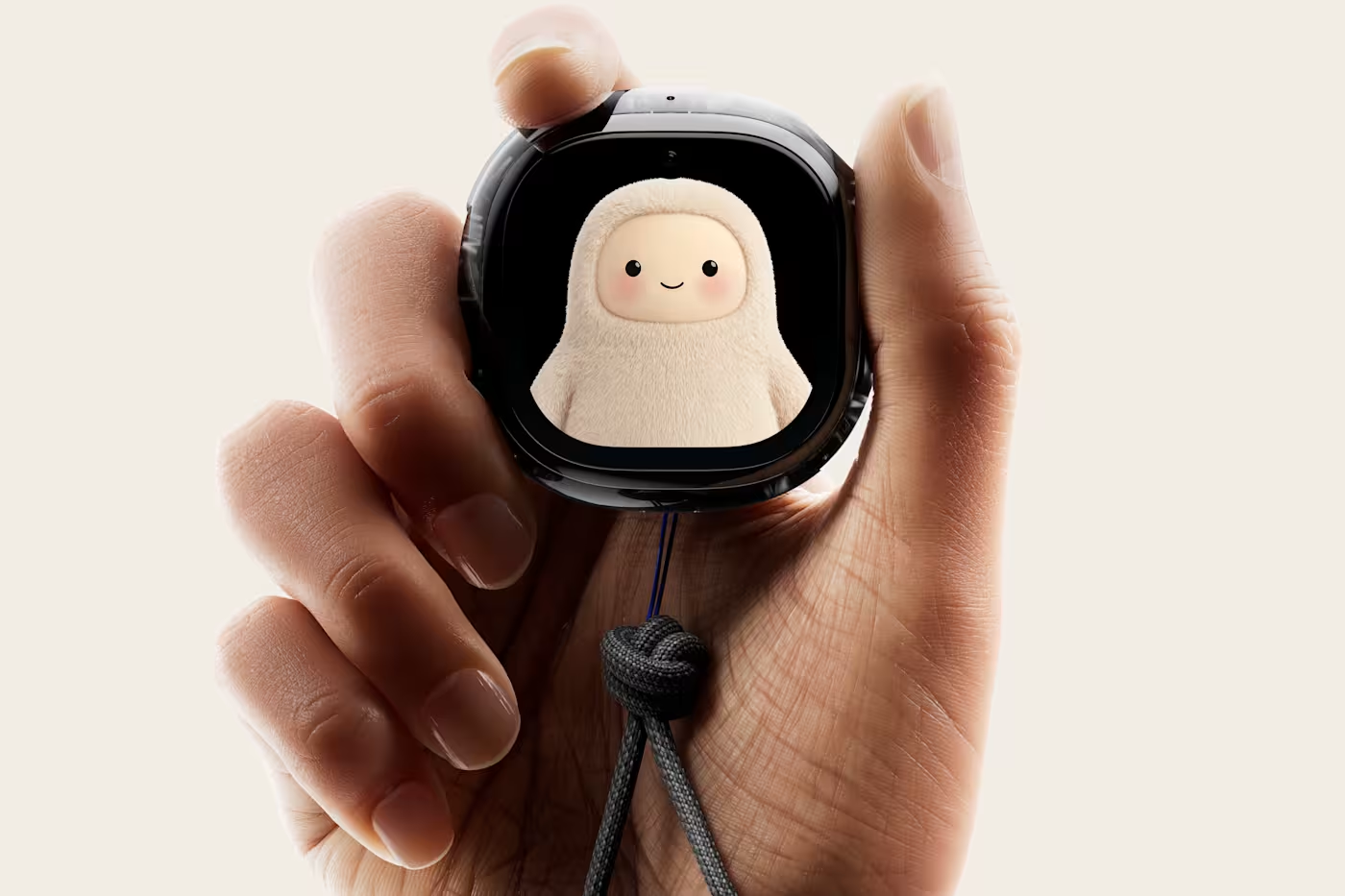
Mark Zuckerberg said Meta’s new personal AI agent Muse has become the “centrepiece” of his AI vision, as he unveiled a new handheld AI “charm” device that will feature the interactive assistant.The Meta chief used the company’s annual Connect event at its Silicon Valley headquarters to announce Muse Charm, a small pendant-like device that fits on a keychain and is activated by a fingerprint sensor.
The device, which features a screen showing the Muse avatar, will also have real-time voice interactivity and is set to be released in December.
“If you’re not wearing glasses, this is going to be by far the fastest way to talk to your Muse and to show what’s going on around you,” the chief executive said.
Muse, development of which was first revealed by the FT in May, has helped change the momentum of Zuckerberg’s huge bet on AI, quickly becoming the most downloaded app on both the Apple and Android app stores in the US since its launch two weeks ago.
The easy-to-use app offers consumers a team of autonomous bots to carry out everyday tasks, such as ordering groceries, booking travel and organising finances.

Zuckerberg on Wednesday also announced new capabilities for Muse, including the ability to have live conversations with the interactive AI assistant, and insisted that it has “state-of-the-art privacy and security”.
The Meta founder has come under increasing pressure from Wall Street as he pours billions of dollars into AI infrastructure and talent, with Meta’s share price falling by more than a quarter between last September and the beginning of August.
But Meta’s stock has bounced back since the September 8 launch, adding $300bn to its market capitalisation. The stock was slightly higher in after-hours trading on Wednesday.
The release of a breakout product to Meta’s 3bn users caps a turbulent two years in which Zuckerberg has repeatedly struggled to compete with OpenAI and Anthropic in developing frontier AI models and features.
Zuckerberg on Wednesday said he believed Muse would “make users money”. As a result, the company would offer a free Muse tier “with the expectation that over time we will profit by taking a small fee from transactions”.
Whether Zuckerberg will emerge vindicated in the long term in his AI strategy — for both his Muse assistant and AI wearables — will depend on whether the new features can withstand potential privacy and security issues as its user base grows.
The Meta chief has bet that smart glasses and other portable devices will become one of the main ways consumers interact with AI, despite critics dubbing its camera-toting Ray-Bans “pervert glasses” after intrusive videos hit Instagram and TikTok.
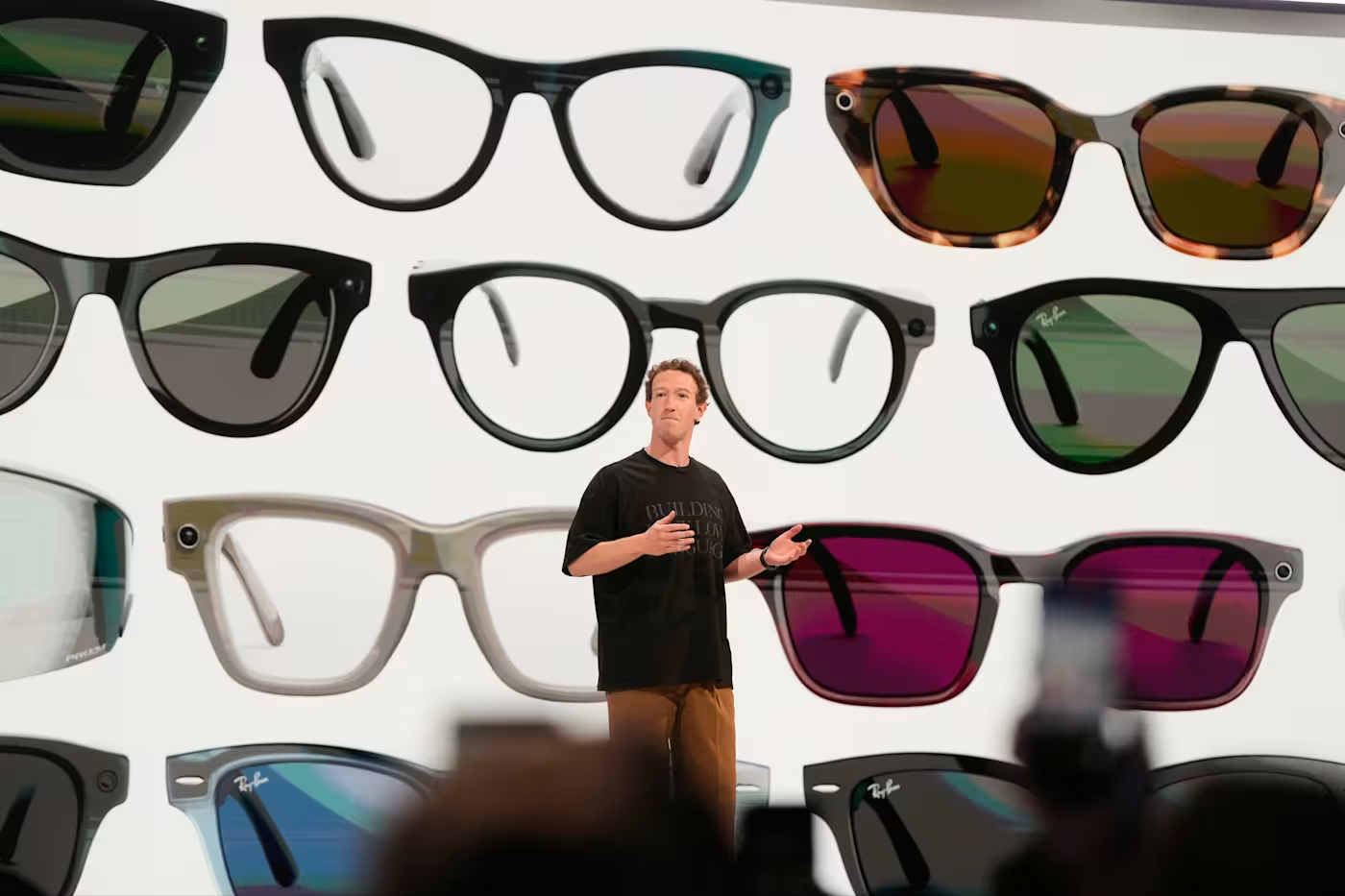
Sold in partnership with eyewear group EssilorLuxottica, the glasses have inbuilt speakers, microphones and cameras that can be used to take photos, listen to music and chat with Meta’s AI.
Critics claim they are being used to record others without their knowledge. Currently the Meta glasses have an LED in the corner of the frame that lights up to signal to others when a wearer is taking photographs or filming.
On Wednesday, Zuckerberg announced a pair of Ray-Bans with no camera that customers can interact with using audio only, alongside several new frame styles from Ray-Ban and the cheaper Meta glasses range.
Meta also launched new virtual reality glasses, which will be available next spring for $1,300 and are five times lighter than the previous Quest 3 model.
Meta said the Muse assistant would soon be available on its glasses. Users will also now be able to have a hyper-realistic digital avatar represent them on video calls while they are wearing the glasses since the spectacles cannot film the wearer’s face.
The avatars use hologram technology that Meta has been working on for years.
Meta — so far the only large AI lab to have rolled out a consumer-friendly agentic assistant — hopes Muse will be able to become highly personalised for users if it is able to access data from activity on its social platforms.
But the company will have to convince consumers to connect personal data, such as their email inbox, financial services apps or calendar, with the bots, which run on the social media group’s Muse family of models, at a time when AI agent technology can still make errors or potentially go rogue.
Meta has already had to issue a fix for a vulnerability that could allow a hacker to take control of another person’s Muse agent. Meanwhile, Amazon has blocked Meta’s agents from accessing its shopping platform as part of efforts to prevent third-party bots from using its systems.
%202%20(2).png)
%202%20(2).png)