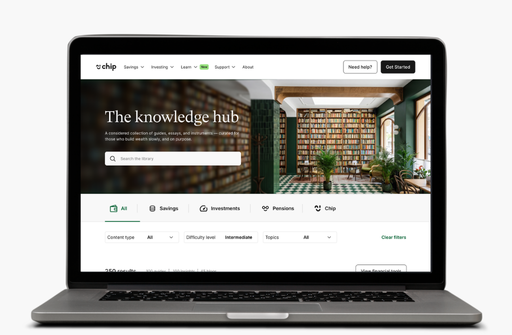
The knowledge hub

A considered collection of guides, essays, and instruments — curated for those who build wealth slowly, and on purpose.

0
results
View tools
Filter results
Filter by:
Content type
Difficulty level
Topics
0
results
View financial tools

What are gold and commodities?

2 min read
Intermediate
Asset classes

Why do people invest in gold?

Gold has held its appeal for thousands of years and for good reason. It’s often viewed as a safe haven1 (prices can fluctuate) investment that people turn to during periods of uncertainty.

Here’s why it continues to attract attention from investors:

  • Store of value: In times of economic crisis or market downturns, gold tends to retain its worth better than riskier assets.
  • Hedge against inflation: When inflation rises and currency loses purchasing power, gold has historically maintained or increased its value – acting as a financial hedge.2
  • Diversification: Gold doesn’t typically move in the same direction as stocks or bonds, making it a useful addition to a balanced portfolio.

1Investopedia

2Investopedia

How to invest in gold in the UK

There are several ways to gain exposure to gold, depending on your preferences, budget, and investment goals:

1. Physical gold
  • Pros: Tangible, recognised globally, no counterparty risk (the chance that a party to a financial transaction, like a loan, investment, or trade, will fail to fulfill its obligations, potentially leading to losses).
  • Cons: Needs safe storage, insurance, can be less liquid than other options.
2. Gold ETFs, Gold ETCs and funds
  • Pros: Simple, cost-effective, easy to buy/sell like stocks.
  • Cons: Doesn’t give you access to physical gold. May involve price tracking errors or management fees.
3. Gold mining stocks
  • Pros: Potential for higher returns if gold prices rise.
  • Cons: Company-specific and operational risks. 
4. Gold savings accounts or digital vaults
  • Pros: Fractional ownership (an option to share between a number of investors), digital ease, lower entry point.
  • Cons: May have account or withdrawal fees, and depends on provider trustworthiness.

Risks and disadvantages of investing in gold 

Like any asset, gold has its downsides. It’s important to understand these before diving in:

  • No income: Gold doesn’t pay dividends or interest – returns are confined to price growth (may be subject to Capital Gains tax).

  • Price volatility: Despite its ‘safe haven’ label, gold can still fluctuate in value based on market sentiment, interest rates, or geopolitical news.

  • Storage and insurance costs: Holding physical gold securely often comes with extra fees and responsibilities.

Historical performance of gold

Gold has historically provided moderate long-term returns, though it can go through extended periods of underperformance. Over the past 20 years, gold has returned an average of ~12% per year.1

It has historically performed best during:

  • Inflationary periods
  • Currency devaluations
  • Market shocks or crises

1 J.P. Morgan

Investing in other precious metals and commodities

Gold isn’t the only option when it comes to tangible assets. Other precious and industrial commodities can also play a role in your strategy.

Precious metals:
  • Silver – More volatile than gold, with both monetary and industrial demand.
  • Platinum & palladium – Used in manufacturing and clean energy tech, offering unique demand drivers.
Broader commodities:
  • Oil & natural gas – Linked to global energy prices. Prone to sharp swings but still essential to global economies.
  • Agricultural commodities – Wheat, coffee, sugar, and livestock can offer growth tied to global supply/demand shifts.

These can help hedge against inflation or add exposure to global growth – but also carry distinct risks based on weather, politics, or regulation.

How to invest in commodities in the UK

You don’t need to stockpile barrels of oil or coffee beans to invest in commodities. Here are some beginner-friendly ways to get started:

  • Commodity ETFs/ETCs – Track the price of specific goods or baskets of commodities (e.g., gold, oil, agriculture).
  • Futures contracts – More advanced and high risk – these involve speculating on the future price of a commodity.
  • Commodity-producing companies – Invest in miners, energy producers, or agricultural businesses.
  • Physical metals – As mentioned, physical gold or silver remains popular for tangibility and trust.

Gold and commodities in a diversified portfolio

Commodities behave differently than traditional assets like stocks and bonds – so they can add balance to your portfolio.

They’re often non-correlated, meaning they may rise when stocks fall (especially during inflation, currency shocks, or geopolitical events).

Investing in gold and commodities summary

Gold and other commodities can be powerful tools for diversification, especially in uncertain economic times.

They don’t generate income like stocks or bonds, but they can help protect against inflation, currency weakness, or financial market shocks.

The right amount for your portfolio depends on your goals, risk tolerance, and time horizon. However, even a small allocation can go a long way in building resilience.

In the next guide of the series we take a closer look at cryptocurrencies and how they work. 

FAQs
How can a beginner invest in gold?

ETCs, ETFs and other digital options can be great starting points due to their accessibility, low cost, and simplicity.

How do you invest in gold in the UK?

Options include buying physical gold (bars, coins), investing via ETCs, ETFs or funds, purchasing mining stocks, or using digital vault platforms.

Is gold the best investment?

Gold is a defensive asset so it can protect against market shocks. Best used as part of a wider, diversified portfolio.

What’s the difference between investing in gold and silver?

Gold is more stable and seen as a store of value. Silver has greater industrial use, tends to be more volatile, but can offer higher returns under certain conditions.

Direct investment into gold and commodities is not available via the Chip platform.

What are ETFs and how do they work?

2 min read
Beginner
Asset classes

How do ETFs work?

ETFs work by tracking a specific index, sector or asset class, and are traded on stock exchanges throughout the trading day, similar to individual shares. 

This means that prices fluctuate throughout the trading day, unlike mutual funds which are priced once per day at market close.

ETF prices fluctuate during the trading day based on supply and demand, giving investors closer visibility of performance. 

Unlike actively managed funds, most ETFs are passively managed, meaning they aim to track the performance of a benchmark or index, rather than trying to outperform it.

This usually means lower fund management fees, which can become expensive over the long term.

Types of ETFs explained

There’s a wide range of ETFs available, covering just about every asset type, region, and trend you can think of. Here are some common categories:

  • Stock ETFs – Track a group of company shares, often from a major index like the S&P 500 or FTSE 100. They offer broad market exposure in a single investment.
  • Bond ETFs – Invest in a mix of government or corporate bonds, offering greater stability and often regular income through interest payments.
  • Commodity ETFs – Follow the price of physical goods like gold, oil, or agricultural products, either by holding the actual commodity or companies in the sector.
  • Sector/Industry ETFs – Focus on specific areas of the economy, such as healthcare, technology, or finance, allowing you to invest in a theme you believe in.
  • Thematic ETFs – Capture emerging trends like clean energy, electric vehicles, AI, or future mobility by investing across sectors aligned to a common theme.
  • ESG ETFs – Invest in companies that meet environmental, social, and governance criteria – appealing to values-led investors, like the FTSE Global All Cap ESG.
  • Crypto or Bitcoin ETFs – Provide exposure to digital assets like Bitcoin or Ethereum, often in a more regulated and accessible form than buying crypto directly.

Why invest in ETFs?

ETFs have become a go-to tool for both new and experienced investors, for several reasons:

  • Diversification – One ETF can hold hundreds of underlying investments, spreading risk across sectors, regions, or asset classes.
  • Low fees – With most ETFs being passively managed, they typically come with lower annual costs compared to actively managed funds.
  • Transparency – ETF holdings are usually published daily, so you can track price movements more closely.
  • Accessibility – Traded on major exchanges and available through investment platforms, you can invest in ETFs just like you would a single share.
  • Passive investing – For those who want a simple, long-term approach, ETFs allow you to mirror entire markets or sectors without having to pick individual stocks.

How can ETFs make you money?

ETFs can generate returns in two main ways:

  1. Capital growth – If the price of the ETF rises (because the value of its underlying assets has gone up), you can sell your shares at a profit.
  2. Dividends – Some ETFs distribute income received from the underlying assets, like dividends from shares or interest from bonds. Others are “accumulating” ETFs, which reinvest earnings automatically to prioritise growth. 

How to invest in ETFs (UK)

If you're in the UK and want to start investing in ETFs, here’s how to get started:

  1. Choose a platform – Use a UK investment platform like Chip.
  2. Open an account – This could be a Stocks and Shares ISA to benefit from tax-free growth, or a General Investment Account (GIA), where proceeds are potentially taxable, subject to any annual exemption that may apply.
  3. Find your ETFSearch by index, theme, or region. Many platforms offer filters and performance data to help you compare options.
  4. Place your order – Decide how much you want to invest and place a buy order. You can invest a lump sum or set up a regular monthly investment.
  5. Monitor your portfolio – Keep an eye on performance over time, and rebalance your holdings if your goals or risk appetite change.

Risks of investing in ETFs

ETFs offer diversification, but they’re not risk-free. Here are some things to watch out for:

  • Market risk – If the assets your ETF tracks fall in value, your investment will too.
  • Liquidity risk – Some ETFs (especially niche or new ones) may not be easy to buy or sell at your preferred price.
  • Tracking error – Occasionally, an ETF won’t exactly mirror the performance of its underlying index.

ETFs summary

ETFs offer a flexible, low-cost way to invest in a wide range of assets.

Whether you’re just getting started or adding diversification to an existing portfolio, they provide instant exposure to markets and themes with relatively low effort.

But like any investment, it's important to research the ETF’s holdings, costs, and strategy before investing.

Our next guide covers commodities, and how physical assets can play a role in a diversified portfolio.

FAQs

What is an ETF in the UK?

An Exchange-Traded Fund (ETF) is an investment fund traded on UK stock exchanges like the London Stock Exchange. It can track markets, sectors, or themes, and is used to build diversified portfolios at low cost.

Does an ETF pay dividends?

Many ETFs pay dividends. Look for “income” or “distribution” ETFs. Some ETFs reinvest the earnings automatically (these are called “accumulating” ETFs).

How do I invest in ETFs?

Open an account with a UK investment platform, choose a suitable ETF, and place a buy order. You can invest via a Stocks and Shares ISA to make it tax-efficient.

How much should a beginner invest in ETFs?

Start with what you’re comfortable with. The emergence of investing platforms means you can now start investing with very little – with Chip, you can get started with £1. The key is consistency and focusing on long-term growth.

What does ETF stand for?

ETF stands for Exchange-Traded Fund – a type of fund you can buy and sell like a stock, offering instant diversification across markets or sectors.


Seccl Custody Limited is the ISA Manager for the Chip Stocks and Shares ISA. A monthly or annual ChipX membership is required for certain funds selected within a Stocks and Shares ISA. Fund management charges apply ISA limits apply.Invest £20k per tax year. Tax treatment depends on individual circumstances and may be subject to change in the future.

GIA proceeds are potentially taxable, subject to any annual exemption that may apply.

Investment into cryptocurrency ETFs is not available via the Chip platform. Chip offers investment funds that invest in different assets as a collective investment.

What are bonds and how do they work?

2 min read
Intermediate
Asset classes

How do bonds work?

When a government or company needs to raise money, it can issue a bond. As an investor, you lend them a set amount and they agree to pay you a fixed interest rate (called the coupon) every year e.g. 3%. 

After a set number of years (the term), they pay you back the £1,000. This is known as the bond lifecycle: 

  1. Issuance – You buy the bond (or a fund that holds bonds). 
  1. Interest payments – You receive regular income, typically annually or semi-annually. 
  1. Maturity – At the end of the term, the bond is repaid in full. 

Bond prices can also rise and fall in value if traded on the secondary market. FDor example, if interest rates change or the issuer’s credit rating shifts.

Types of bonds explained

Here are the main categories of bonds you’ll come across: 

  • Government bonds (gilts) – Issued by the UK government. Generally considered very low risk, but with lower returns. 
  • Corporate bonds – Issued by companies to raise funds. Riskier than gilts, but they usually offer higher interest. 
  • Green bonds – Used to fund environmentally-friendly projects. Growing in popularity among ethical investors. 
  • Index-linked bonds – Designed to keep pace with inflation, as the payments rise in line with a price index like the CPI. 
  • In the US: Savings Bonds, which are government-issued and often used for long-term savings goals. These differ from UK bonds in structure and taxation, and are only available to US citizens.

Why invest in bonds?

Bonds can play a key role in a well-rounded portfolio. Here’s why: 

  1. Income generation – Regular interest payments can provide a steady stream of income. 
  1. Capital preservation – Bonds tend to be more stable than stocks, so they can help protect your investment. 
  1. Diversification – Adding bonds can smooth out the ups and downs of a stock-heavy portfolio. 

Risks and disadvantages of bonds

Bonds are lower risk than stocks, but not risk-free. Here’s what to consider: 

  • Credit risk – The issuer might fail to pay interest or repay the loan (this is rare with government bonds, more possible with corporate bonds). 
  • Interest rate risk – If interest rates rise, existing bond prices can fall. Inflation risk – If inflation outpaces your bond’s return, your real purchasing power can shrink. 
  • Liquidity risk – Some bonds can be harder to sell quickly without losing value, especially in a downturn.

How to invest in bonds (UK)

There are a few ways to invest in bonds as a UK investor: 

  1. Bond funds or ETFs – These are collections of bonds bundled together, offering easy access and instant diversification. 
  1. Direct purchase – You can also buy individual gilts or corporate bonds through some investment platforms. 
  1. Use tax-efficient wrappers – Investing through a Stocks & Shares ISA or a pension (not available with Chip) helps you keep more of your returns. 

How do I invest in bonds? 

Start by choosing a platform, selecting a bond fund or individual bond, and deciding how much to invest. Funds and ETFs are often easier for beginners.

Who should consider investing in bonds?

Bonds can suit a wide range of investors, including: 

  • Investors approaching retirement – Looking for steady income and capital protection. 
  • Cautious investors – Seeking lower volatility than stocks. 
  • Income-seekers – Wanting predictable returns through interest payments. 

If you’re someone with a lower risk tolerance or nearing a major financial milestone, bonds can provide valuable balance in your investment mix.

Common bond-related terms explained

  • Yield – The return you earn from a bond, usually expressed as a percentage.
  • Coupon – The interest payment a bond pays, often annually.
  • Maturity – When the bond issuer repays the original amount borrowed.
  • Par value – The bond’s face value, typically £100 or £1,000.
  • Credit rating – An assessment of how risky a bond issuer is. Higher ratings mean lower risk.
  • Bearer bonds – Rare today, these are unregistered bonds where whoever holds the paper owns the bond.
  • Duration – A measure of a bond’s sensitivity to interest rate changes.
  • Callable bonds – Bonds the issuer can repay early, which can affect returns.

Investment bonds summary

Bonds are a type of investment where you lend money to a government or company in exchange for interest payments. 

They’re generally lower risk than stocks, making them popular for income, stability, and diversification. While they come with their own risks, like interest rate changes or inflation, bonds can play a key role in your long-term financial plan.

In our next guide, we’ll cover exchange-traded funds (ETFs), what they are, how they work, and why they’re one of the most popular investment choices for both beginners and seasoned investors. 

FAQs

What are bonds in simple terms? 

Bonds are loans you give to a government or company. In return, they pay you regular interest and repay your money after a set time.

Are bonds a good way to invest? 

Yes, especially if you're looking for stability and income. They may not grow as fast as stocks, but they’re generally lower risk.

How do beginners invest in bonds? 

The easiest way is through bond funds or ETFs on an investment platform. You can also use a Stocks & Shares ISA to invest tax-free.

What are the disadvantages of bonds? 

Bonds carry risks like interest rate changes, inflation, and defaults. Some can also be harder to sell quickly if you need access to your money.

What are stocks and how do they work?

2 min read
Beginner
Investing basics

How do stocks work?

Companies issue shares to raise money often through an initial public offering (IPO), which allows them to sell ownership stakes to investors.

Once listed on a stock exchange, these shares can be bought and sold by the public. 

The price of a share is driven by supply and demand. If more people want to buy a stock than sell it, the price goes up, and vice versa.

Market value (or market cap) is the share price multiplied by the total number of shares. 

Prices change based on company performance, news, investor sentiment, and broader economic factors.

Why invest in stocks?

Investing in stocks gives you the chance to grow your money if a company's value increases over time.

Some stocks also pay dividends, a portion of company profits shared with shareholders, potentially providing regular income. 

Over the long term, stocks have historically outperformed cash savings and helped investors build wealth. While short-term ups and downs are normal, staying invested can pay off.

How do stocks make you money?

As mentioned above, investors can potentially make money from stocks in two ways:

  1. Capital appreciation - this means the price of your stock has increased. When your appreciated money is invested in a stock, you won’t make a profit until you ‘realise’ your gains by selling it.
  1. Dividends - this is a share of a company’s profit, paid out to you in cash. Not all stocks offer dividends, and payouts are at the discretion of the company. 

Types of stock explained

  1. Growth stocks aim for rapid expansion and often reinvest profits, so they may not pay dividends. 
  1. Value stocks are seen as undervalued by the market and could offer higher potential growth. 
  1. Dividend stocks regularly share profits with investors, providing income alongside potential growth. 
  1. Blue-chip stocks are large, established companies known for stability
  1. Penny stocks are low-priced and higher risk, often tied to smaller or newer businesses. 

Each type comes with its own balance of risk and reward, so it’s worth matching your picks to your goals and comfort level. Understand stock market basics.

Risks of investing in stocks

Stock prices can rise and fall quickly due to market volatility, meaning there’s always a risk of losing money.

Emotional investing, like panic selling during downturns, can lock in losses and hurt long-term returns. 

It’s important to understand your risk tolerance and avoid reacting to short-term market noise.

Diversifying your investments and staying focused on long-term goals can help manage risk investments. A steady mindset is just as valuable as a strong portfolio.

Stocks summary

Stocks let you buy a slice of a company, with the potential to earn through rising prices and dividends — though prices move up and down.

They’re a powerful tool for long-term growth, especially when you stay diversified and think long-term.

Next, we’ll explore investment bonds — typically a steadier asset than stocks that can offer regular income and help balance risk in your portfolio.

FAQs

Is investing in stocks worth it?

Investing in stocks can be one of the most effective ways to grow wealth over time. While there are risks, stocks have historically outperformed cash savings and inflation, especially over a long-term investment horizon.

Do all stocks pay dividends?

No, not all stocks pay dividends. Some companies reinvest their profits to fuel growth instead. These are often called growth stocks, while dividend-paying stocks provide income alongside potential capital gains.

Which stock is best for beginners?

There’s no one-size-fits-all answer, but beginners often start with well-known, stable companies (blue-chip stocks) or consider index funds and ETFs, which spread your money across many stocks to lower risk.

Direct investment into individual stocks is not available via the Chip platform. Chip offers investment funds that invest in different assets as a collective investment.

Ethical and thematic investing

2 min read
Expert
Investing basics

What is ethical investing?

Investing ethically means choosing to allocate all or some of your investments based on moral, social, religious or environmental values. 

An example would be an ETF that excludes certain industries, such as tobacco, weapons and fossil fuels.

As an individual investor, it can be difficult to ensure harmful industries aren’t included in a fund, as it might be made up of thousands of investments. 

In response to demand, fund managers are increasing their provision of particular ethical investment options, tailored towards different values.

This can be anything from a fund focussed on clean energy solutions, to a Shariah fund that is compliant with Islamic Law. 

What is thematic investing?

Investing in a particular thematic refers to long-term trends – think clean energy, AI, space innovation.

A lot of thematic investment trends are focussed on ethical themes such as climate and tech innovation, but this isn’t a guarantee. 

ETFs that cover thematics have seen a recent surge in popularity, thanks to availability of lower cost investment options and ever-growing trends in innovation. 

ESG, SRI and impact investing: What’s the difference?

There are a few terms and acronyms you might see associated with ESG or thematic funds:

  • ESG (Environmental, Social, Governance) – This term refers to the framework used to assess the sustainable and ethical commitment of a particular company. You might see this tagged onto the end of a fund name, which indicates it meets the criteria of this framework.
  • SRI (Socially Responsible Investment) – This term refers to the social responsibility of an investment. Again, this could be an assessment of a particular company or an ETF made up of these companies than comply with this framework.

Why do people choose ethical or thematic investing?

There are a few reasons people might choose ethical or thematic investing:

  • To align their investments with personal values and drive positive change – think climate progress, healthcare equality, conflict resolution.
  • A belief that these investments will outperform other investments over time. For example, a sustainable and innovative sector might see more significant growth and demand, as global regulations tighten
  • An opportunity to invest in exciting future trends like AI and space innovation.

How can you access ethical and thematic investments?

If you’re looking to invest in ethical or thematic investments, there are a few vehicles you can use:

  • ETFs & Funds – Such as an ESG focussed multi-asset fund or AI ETF
  • Stock Picking – Choosing individual companies that align with interests, principles or frameworks
  • Robo-advisors – Some offer ethical or thematic portfolios, and preference setting to suit different needs
  • Fund ESG/SRI Ratings – Some platforms offer a rating system to help investors identify a fund's ethical commitments

Understand the basics of investment portfolio management.

How to get started with ethical and thematic investing

If you’re interested in getting started:

  • Think about what aligns with your values and interests.
  • Look for the right investment fund or asset class for you.
  • Start small and aim for diverse exposure.
  • Reassess your portfolio annually and make sure it still aligns with your values and goals.

Retirement and long-term investing

2 min read
Beginner
Investing basics

Why retirement planning matters

Saving alone often isn’t enough. Rising living costs, longer lifespans, and inflation can eat into the value of your savings over time.

Investing helps your money grow faster than inflation — giving you a better chance of reaching your retirement goals.

Starting early means your investments have more time to grow through compound returns. Even modest monthly contributions can snowball into a chunky retirement pot if you begin in your 20s or 30s.

What is long-term investing?

Long-term investing generally refers to committing your money for 10 years or more, often with retirement as the goal. It’s less about picking stocks and more about staying the course and letting time do the heavy lifting.

By sticking with your investments long-term, you’ll be able to see the effects of compounding (snowballing returns).

Short-term volatility will matter less, and you’ll be less tempted to make impulsive decisions, because you have a plan in place. 

Common investment options for retirement

Pensions (State & Private)
  • State Pension: In the UK, this provides a basic income from age 66+, but for most people, it’s not enough to live on alone.
  • Workplace Pension: You and your employer contribute to help boost your retirement savings. You’ll get tax relief, and this is an opt-out scheme so if you meet the requirements, this will build automatically.
  • Private Pension (SIPP): You invest the money yourself, and you’ll still get tax relief. Offers more control and choice over where your money is invested. Generally, employers won’t contribute outside of a workplace pension so this could be a better option to supplement your workplace pension.

Chip does not currently provide these types of investment products.

Index funds and ETFs

Using low-cost, diversified funds that track a broad market index, can be a great vehicle for retirement investing. More information about what ETFs are.

As the holdings of these funds are adjusted in line with market movements, it can be a great passive option, as you don’t have to choose stocks yourself. 

Other ETFs can also offer great diversity, but make sure you’re aware of the holdings, and make sure you aren’t over exposed to one particular sector or market, as any downturns might have a bigger effect on your retirement portfolio. 

Learn about different investment types and asset classes.

Target-date retirement funds (TDF)

Target-date retirement funds automatically adjust the weighting of a portfolio as the investors retirement date approaches.

Weightings shift from higher risk assets such as stocks to lower risk assets like bonds, in line with the funds roadmap. 

The main benefit of using a TDF is the professional management. The ‘glidepath’ or roadmap of the fund is carefully designed to map out an investment journey that mitigates against overexposure to risk, but also seeks to significantly outpace inflation. 

How much should you invest for retirement?

There’s no one set path for budgeting for your investments, but there are a few popular rules you can follow to keep yourself on track each month:

  • The 50/30/20 rule is a simple budgeting technique that ensures each month you can take care of the essentials, like rent and bills (50%), enjoy the things you love (30%), and pay something towards your future with saving or investing (20%). Full guide here.
  • The 25x rule or 4% rule helps you calculate the total amount of money you should aim to save before retiring. Multiplying your yearly retirement expenses by 25 assumes you’ll be covered, withdrawing 4% of your invested portfolio each year to sustainably cover living costs. 

These are a couple of options that can help, but everyone’s situation is unique, so it can be good to play around with calculators to help you.

A Monte-Carlo simulator allows you to input your investment asset allocation and details of your investing timeline, providing you with a series of outcomes.

No portfolio path is binary, and viewing the variety of possible outcomes and their probability, can help you ground your expectations. 

Starting early will always give you the best chance of reaching your retirement goals, and in some cases you may be able to beat your retirement target.

Starting in your 20s is ideal as you can comfortably invest little and often, but it’s not too late for you if you’re starting in your 30s, or even 40s. 

Strategies for long-term investing success

Stick to the following principles, and you can build a long-term, passive investment strategy that you can have confidence in:

  • Start early, stay consistent. Even small amounts compound over time
  • Automate your contributions. Remove friction and emotion
  • Diversify your portfolio. Reduce risk and improve stability
  • Reinvest dividends or choose accumulating assets. Accelerate growth through compounding
  • Avoid market timing. Focus on time in the market, not timing it
  • Review and rebalance annually. Adjust as life goals and risk tolerance evolve

Mistakes to avoid when investing for retirement

Keep the following in mind when investing with retirement as your goal:

  • Starting too late. Start as soon as you can, even small amounts can make a big difference
  • Taking on too much or too little risk. Make sure your asset allocation is right for where you are in your investment journey
  • Not accounting for inflation. Remember to account for the effect of inflation when tracking your required retirement pot
  • Cashing out early (highlight penalties or lost growth). There are tax implications for taking your pension early, and you might miss out on potential growth. Stick to your plan
  • Ignoring fees and charges. Fees compound in the same way returns do, so don’t pay more than you need to

Learn more about behavioral investing and common mistakes.

Ethical and thematic investing

The investing landscape is shifting. Ethical and thematic investing is growing in popularity, as more investors week to align their portfolio with their own values. 

Our next guide will go into what ethical and thematic investing are, the different types, how they work and how to get started. 

Understanding investment fees and costs

2 min read
Intermediate
Investing basics

Why investment fees matter

Investment fees can have a significant impact on your portfolio over time. Where you invest, how you invest, how frequently you invest – these can all impact the annual costs of your investments.

If your portfolio earns a 7% average annual return, and your fees add up to 1%, your real returns are only 6%. 

How investment fees affect your returns

It’s easy to shrug off small percentages, as they may not feel like much. This can really add up over a long-term investment horizon, and consider that compounding works in the opposite direction too.

Lets say you invested £100,000 over a 30 year period, with a 7% average return (before fees):

  • 0.25% fees – £761,000
  • 1.5% fees – £574,000

By saving on fees, you’d end up with an extra £187,000!

Types of investment fees explained

If you’re using an investment platform such as Chip, the fees you’ll need to be aware of are platform fees, and fund management fees. 

If you’re using a financial advisor, there will be a fee associated with this. 

In some cases, there are direct fees associated with buying and selling assets. This is more common with trading stocks, mutual funds, and foreign investments; and are typically charged per transaction.

Platform or account fees

Platform fees, sometimes called account fees, are charged by your platform operator to cover certain operating costs.

These fees are usually expressed as a percentage of your portfolio value e.g. with Chip, it’s 0.25% on our free investing plan, or 0% with ChipX*. Some providers charge a flat monthly or annual fee e.g. £4.99 per month. 

Historically, DIY investing was dominated by a few providers, who were able to charge higher maintenance fees.

The development of investment platforms, like Chip, give investors an easily accessible experience at much lower costs. 

*A monthly or annual ChipX membership fee is required and fund management charges apply.

Management fees (OCF)

A management fee, or Ongoing Charge Figure (OCF), represents the annual cost of running a particular investment.

Typically these are applied to investments in ETFs and Mutual Funds. These fees are also expressed as a percentage of your portfolio e.g. 0.45%.

Management fees enable the professionals choosing and managing investments on your behalf, while also researching, trading, and monitoring your investments, to work towards getting you the strongest performance.

If you invest using a ready-made solution, sometimes the platform fee and management fee are layered into one, easy to understand fee. 

For example, if you invested in a ready-made fund with an OCF of 0.45%, using a platform that charged a 0.25% platform fee, you may see this expressed as one fee of 0.7%.

Advisory fees

If you use a financial advisor, or advisory platform, there will be an associated fee, on top of your platform and management fees.

This may be expressed as a percentage of your portfolio, or as a flat fee annual, monthly or even hourly fee for services and consultations. 

Robo-advisors are a relatively new form of advice, and generally come at a lower cost to traditional financial advisors. These can be a separate service, or in some cases are built into platforms themselves. 

Trading or transaction fees

Trading or transaction fees are charged when you buy or sell investments. These are more common with individual stocks, mutual funds, or when investing in assets outside of the UK. 

Some platforms offer commission-free trading, while others may charge a fixed fee per trade (e.g. £5–£10), especially for less frequently traded assets.

It’s worth checking whether your platform charges per transaction or offers commission-free investing.

Over time, frequent trading can rack up costs and eat into your returns, particularly if you're making small trades or investing regularly.

Potentially hidden fees

Inactivity fees

Some platforms may charge a fee if your account is inactive for a certain period—meaning you haven't made a trade or deposit in a while.

While this is becoming less common with modern platforms, it’s worth checking the small print to avoid any surprises.

Foreign Exchange (FX) fees

If you’re investing in international assets (like US stocks or global ETFs), your pounds need to be converted into a foreign currency.

FX fees are usually charged as a percentage of the amount converted – often around 0.5% – 1.5%.

This can apply both when you buy and sell, so it’s important to factor these costs into your decision to invest internationally.

Exit or withdrawal fees

Some providers may charge you for withdrawing or transferring your money out of a platform – particularly when closing an account or moving investments to another provider.

These can be fixed fees (e.g. £25 per fund) or a percentage of your balance. 

Checking exit terms ahead of time can save you from unnecessary costs later on.

Bid-ask spreads

This is the difference between the price a buyer is willing to pay (the bid) and the price a seller wants to receive (the ask).

While this isn’t a “fee” in the traditional sense, it can represent a hidden cost – especially with less liquid investments like certain ETFs or niche funds. 

The wider the spread, the more you might lose when entering or exiting a position. 

How to check the fees you’re paying

Most UK investment platforms (like Chip) provide:

  • A "fees" or "charges" section on the product/fund page

  • A key facts document (KID or KIID) – this is required for each investment fund or ETF

  • Your account summary or statements – often shows what fees you've paid

Understanding retirement and long term investing

Getting yourself on track to a healthy retirement will require some planning, and a long-term investment outlook. Saving simply isn’t enough once you factor in the effects of inflation on a cash sum. 

The next guide will take you through why long-term investing matters, your investment options for retirement, and some planning considerations to keep you on track. 

Behavioural investing & common mistakes

2 min read
Intermediate
Investing basics

What is behavioural investing?

Behavioural investing looks at how emotions and psychological biases impact the decisions we make as investors.

Instead of always being rational, we’re often influenced by fear, greed, overconfidence, or herd mentality – all of which can lead to poor investment choices.

Even experienced investors fall into these traps. The key is recognising your own behavioural patterns and learning how to work with your psychology, not against it.

Why does psychology matter in investing?

Investing is emotional. Seeing your portfolio rise feels great. Watching it fall? Not so much. But reacting impulsively to short-term market movements can quickly derail your long-term strategy.

When markets dip, panic selling can lock in any losses. When markets surge, FOMO can push people to chase risky trends, and the instant market coverage we can access is driving these trends.

Understanding how your brain responds in these moments can help you stay calm and make more rational decisions.

The most common behavioural investing mistakes 

Here are some of the biggest traps to look out for:

  • Panic selling – Selling your investments when markets fall, locking in losses and potentially missing out on the recovery.
  • Overtrading – Constantly buying and selling, thinking you can ‘time the market’. This often racks up fees and most of the time underperforms long-term strategies.
  • Confirmation bias – Only seeking information that supports what you already believe, and ignoring anything that challenges your view.
  • FOMO (Fear of Missing Out) – Jumping on hype trends or following the crowd into hot stocks without doing your own research.
  • Recency bias – Placing too much importance on recent events and assuming they’ll continue, like believing a falling market will never bounce back.

How to avoid behavioral investing mistakes

If you want to avoid these common mistakes, make sure you:

  • Have a plan – Create an investment strategy that aligns with your goals, time horizon and risk tolerance, and stick to it – especially during periods of market noise.
  • Automate your investing – Using regular contributions and pound-cost averaging takes emotion out of the equation and helps you invest consistently.
  • Zoom out – Always take a long-term view. Markets fluctuate in the short-term, but historically, they trend upward over time.
  • Stay informed (not obsessed) – Stay educated, but avoid doom-scrolling financial news. Not every market dip needs a reaction.
  • Review, don’t react – Instead of making snap decisions, schedule regular check-ins on your portfolio to assess and rebalance if needed.

Understanding investment fees & costs

When you invest through a platform, there are often platform fees charged to cover running costs. This is often a very small fee — with Chip, it’s 0.25% of your portfolio value (or 0% with a ChipX subscription*). 

In addition to your platform fee, there will also be an ongoing management charge from the fund provider, if you choose to invest in investment funds

The costs of these can vary, and generally, passive index funds are lower cost, and actively managed funds are a little more expensive, as someone is actively adjusting the funds investments. 

We will go into investment fees and costs in more detail in the following guide. 

*A monthly or annual ChipX membership fee is required and fund management charges apply.

Investment Portfolio Management

2 min read
Expert
Investing basics

What is portfolio management? 

Portfolio management is the ongoing process of you selecting, monitoring and adjusting your investments to meet your financial goals.

It’s not just about choosing a few investments and crossing your fingers – it’s about seeing the full picture and making smart, informed choices.

That means thinking about the mix of investments you own (also called asset allocation), how much investment risk you’re taking, and making regular adjustments as life or market conditions change.

Done well, it can help you grow your wealth steadily while keeping risk at a level you’re comfortable with.

Investment portfolio management examples

The following portfolio management strategies are commonly used:

Cautious portfolio: Might include a large portion of bonds and cash, with a smaller slice in equities.
Great for:
people close to retirement or those who don’t want much risk.
Balanced portfolio
: Typically splits investments between equities and bonds, aiming for moderate growth with manageable risk.
Great for:
long-term investors who want a bit of both worlds.: Heavier on equities (including global and emerging markets), and lighter on bonds or cash. 
Great for:
investors with a higher risk tolerance and a longer time horizon.

These are just examples; your ideal portfolio depends on your goals, timeline, and how much market fluctuation you’re okay with.

DIY investing vs managed portfolios

There are two main tracks you can go down with your portfolio:

DIY Investing

You pick and manage all your investments yourself.

Great if: you like having full control, enjoy researching markets, or want to tailor things really specifically. But it requires time, confidence, and a steady hand when markets wobble.

Managed Portfolios

You choose a risk level, and a provider (like Chip) builds and maintains a diversified portfolio for you.

Great if: you want a more hands-off approach, but still want exposure to the market. You’ll usually pay a small fee for this convenience, but it can be well worth it if it helps you stay invested long-term.

What is asset allocation & why it matters?

Asset allocation is the mix of different asset classes in your portfolio – typically things like equities (stocks), bonds, cash, and sometimes alternative assets like property or commodities.

Getting the mix right is crucial. Why? Because it’s one of the biggest factors that affects your portfolio’s overall risk and return.

  • More equities – higher potential returns, but also more ups and downs.
  • More bonds – lower risk, but also lower growth.

Your ideal allocation depends on your goals and how long you’re planning to invest. This is not set in stone, and it can (and should) shift over time.

How to rebalance your investment portfolio

Over time, some of your investments will grow faster than others, which means your portfolio can drift away from your original asset allocation. That’s where rebalancing comes in.

Rebalancing means adjusting your investments to bring them back in line with your target allocation.

For example, if stocks have surged and now make up 80% of your portfolio instead of your intended 60%, you might sell some and buy more bonds or cash-equivalents.

Some managed portfolios (like what’s listed on the Chip app) automatically rebalance for you. If you’re doing it yourself, you might want to set a calendar reminder every 6 or 12 months to review your allocation.

Understanding behavioural investing & common mistakes

When it comes to investing, your emotions can be your worst enemy. Many investors panic-sell when markets fall, or chase after the latest stock or trend, only to end up buying high and selling low. 

This is known as behavioural investing, and it’s often where people slip up. The majority of investment gains are dampened by a degree of investor error, and generally the less decisions you can make, the better. 

The next guide in our series will dive into this in some more detail. 

Thank you! Your submission has been received!
Oops! Something went wrong while submitting the form.