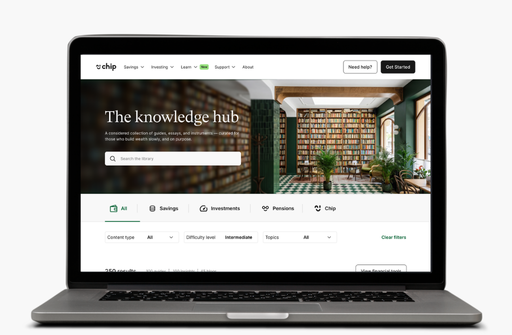
The knowledge hub

A considered collection of guides, essays, and instruments — curated for those who build wealth slowly, and on purpose.

0
results
View tools
Filter results
Filter by:
Content type
Difficulty level
Topics
0
results
View financial tools

Stock Market Basics

2 min read
Beginner
Investing basics

How do Stock Markets Work?

Stock markets are essentially auction houses for shares. Companies list shares to raise money – this is called an Initial Public Offering (IPO), and investors can then buy and sell those shares with each other on an exchange.

Prices change in real-time, depending on how many people want to buy or sell a stock. 

The major stock exchanges (like the NYSE or London Stock Exchange) have set opening hours and are highly regulated to try and ensure trading is fair and transparent.

How do Stocks Work?

When you buy a stock, you’re buying a small piece of a company – a share in its ownership. If the company performs well and becomes more valuable, so do your shares – and you! 

You can also earn money through dividends, which are portions of the company’s profits paid out to shareholders. 

Of course, the value of stocks can go down too. If the business performs poorly or market conditions shift, your investment can lose value. More information about how stocks work.

Understanding the Stock Market

The stock market isn’t a singular place where all stocks are traded –  it’s made up of lots of exchanges, sectors, industries, and regions. Tech, healthcare, energy, retail all react differently depending on the economy, news and investor sentiment.

That’s why most investors don’t just pick one stock and hope for the best. Instead, they build a diversified portfolio to spread their risk (more on that in the next section). Learn about investment portfolio management.

Why does the Stock Market go up and down?

In short: confidence and expectation. When investors are optimistic about a company or the economy, they tend to buy, which pushes prices up. When uncertainty hits (interest rate hikes, political instability, global events, natural disasters), investors might panic and sell, which drives prices down.

These ups and downs are part of the deal when you’re investing. They’re known as market fluctuations or volatility.

What is Market Volatility?

Volatility refers to how much – and how quickly – the price of an investment changes. High volatility means big up and down price swings. Low volatility means steadier, more predictable price movements.

Volatility is normal and often driven by short-term news, but it doesn’t always reflect the long-term value of a company. That’s why many investors focus on time in the market rather than trying to time it perfectly.

Global Stock Market Indices

Market indices track the performance of a specific group of companies, giving you a snapshot of how that part of the market is doing. Some of the most well-known include:

  • FTSE 100 – Top 100 companies listed in the UK

  • S&P 500 – 500 of the biggest companies in the US

  • Nasdaq – Primarily tech companies in the US

  • Nikkei 225 – Major companies listed in Japan

You can’t invest in an index directly, but you can invest in index funds or ETFs that aim to track them, which is a great way to get broad market exposure. What are asset classes?

How to Invest in the Stock Market?

You can access the stock market through an investment platform or app (like Chip), and typically you’ll invest via one of the following:

  • Stocks & Shares ISA – for tax-efficient investing

  • General Investment Account (GIA) – flexible, no contribution limits

You can invest in popular stock market indices by investing in index funds that track their performance directly, such as the S&P 500, FTSE 100 and the Nasdaq.  

Investment Portfolio Management

Once you’ve got to grips with the basics of the stock market, and the different asset classes available to invest in, you’ll want to figure out the type of investment portfolio management style to suit you. 

The next guide in our series takes you through the options in more detail. 

Seccl Custody Limited is the ISA Manager for the Chip Stocks and Shares ISA. Fund management charges apply. ISA limits apply. Invest £20k per tax year. Chip does not provide tax advice or financial advice. Tax treatment depends on individual circumstances and may be subject to change in the future. GIA proceeds are potentially taxable, subject to any annual exemption that may apply. 

Risk, returns, and investment strategies

2 min read
Intermediate
Investing basics

Understanding investment risk tolerance

Your risk tolerance refers to how much risk you are comfortable with. A high risk tolerance means you're more comfortable with the idea of losing money, and a low risk tolerance means you're less comfortable. 

Generally, there is a trade-off between risk and reward in investing. That means asset classes that historically have yielded the biggest returns, have the most potential for volatility.

For example, the equities markets have outperformed lower risk bonds long-term, but typically fall further during bad market days. 

If you decide you want to pursue higher risk investments, ask yourself, "Would I be happy seeing a significant drop in the value of my investment during volatile periods?”

Maybe look at risk through the lens of your day to day life. Do you often take risks? Would your close friends and family describe you as a risk taker? 

It’s also important to consider:

  1. Investment time horizon – How much time do you have to invest? What stage of life are you in? If you have longer, you might be able to cope with some volatility, as long-term there’s a much greater chance your investment will yield greater returns than losses. 
  1. Financial situation – How much would a fall in your investment affect your standard of living? (this is known as your financial capacity for loss). It’s recommended that you save 3-6 months of essential living expenses in cash as an emergency fund, and clear any outstanding high-interest debt before you consider investing. 
  1. Liquidity needs – How much cash do you need access to in order to meet immediate financial needs. It might be a good option to keep some of your investments in something that’s easier to liquidate (sell) if you may need access to the cash in the near future. 

How to calculate Return on Investment (ROI)

ROI is a simple way to see how much money you’ve made (or lost) on an investment, relative to what you put in.

To work it out, subtract the cost of your investment from the final value, then divide by the cost. Multiply that number by 100 to get a percentage.

ROI = (Final Value - Initial Investment) / Initial Investment × 100

It’s a handy tool for comparing different investments, but keep in mind it doesn’t factor in things like time or fees.

Investing Strategies

There are a number of strategies you can use when investing, that suit a variety of risk tolerances and investment horizons.

Not all of these strategies cater to a long-term strategy, so keep that in mind when choosing what’s right for you.

You also don’t have to stick to one strategy. Depending on your risk tolerance, you could combine conservative and speculative strategies, as a weighting of your portfolio – similar to the way you diversify using asset classes. 

Growth Investing Strategy

Growth investing focuses on putting your money into companies that are expected to grow faster than average – think up-and-coming tech companies or innovative startups.

These companies often reinvest profits to fuel growth, so you might not see big dividends, but the share price could rise significantly over time.

This strategy tends to suit investors with a higher risk tolerance and a long-term outlook.

It can be rewarding, but also more volatile, especially if markets dip or the company doesn’t live up to expectations. How do stocks work?

Value Investing Strategy

Value investing is like bargain hunting. You're looking for companies that are deemed ‘undervalued’ by the market – quality businesses going for less than what they’re really worth.

The idea is that over time, the market will catch on, and the stock price will rise.

It’s a more patient, long-term strategy and usually involves digging into the specifics of a company (like earnings, assets, and debt).

This approach has been championed by legendary investors like Warren Buffett.

Index Investing Strategy

Index investing is a low-maintenance, low-cost way to invest by investing in a whole market index (like the FTSE 100 or S&P 500), rather than picking individual stocks.

You’re spreading your risk across hundreds of companies, which helps balance out the ups and downs of any single stock price.

It’s a popular strategy for beginners and long-term investors who want steady exposure to the market without trying to ‘beat’ it. 

Pound-cost Averaging Strategy

Pound-cost averaging means investing a set amount of money regularly, regardless of whether the market is up or down.

Over time, this helps smooth out the price you pay for investments and can reduce the impact of volatility.

You end up buying more units when prices are low, and fewer when prices are high, as the same amount is invested each time.

It’s a great way to build a habit of investing and avoid trying to time the market (which even the pros struggle to get right).

Momentum Investing Strategy

Momentum investing is about chasing market trends. You buy investments that have been going up in value, with the belief that they’ll keep climbing (for a period of time).

This strategy relies on trends and market psychology, rather than company fundamentals. It can be potentially profitable in the short term, but it also comes with higher risk, prices can fall just as quickly. It’s not regarded as a long-term strategy, and it’s important to have an exit plan.

Understanding Stock Market Basics

The stock market is, simply put, a place where buyers and sellers trade shares in public companies. When you buy a share, you’re buying a small piece of that company.

Stock prices move up and down based on how investors feel about a company’s future, as well as broader economic news.

Our next guide dives deeper into the basics of the stock market. 

Investment Types & Asset Classes

2 min read
Intermediate
Investing basics

What are stocks and how do they work?

Stocks (not directly available with Chip), often referred to as shares or equities – are a share of a particular company, issued by a company, on a stock market, in order to raise capital or a market valuation. 

If you purchase a company’s stock, this represents partial ownership in the business. The value of this stock, like any investment, can move up or down. 

If the value goes up, you can sell your shares for a profit, or the company can pay back the increased valuation as a ‘dividend’, a cash payment to investors.

What are bonds and how do they work?

Corporate Bonds, Fixed Interest Securities and Gilts (not directly available with Chip) are loans that you pay to a company, or government, and they agree to pay you back, with interest, after a fixed time period. 

The returns you earn are fixed, and are usually made in regular interest payments, if you own the bond directly. They offer greater stability to a portfolio, as they are less volatile than owning stocks, where the value can dramatically go up or down. 

The downside risk to bonds is that if interest rates go up, the value of the bond will decrease, because newly issued bonds with better returns become more attractive to investors. 

If they run into financial difficulty, there is a small risk that a company or government is unable to pay you back, but this is more associated with lower quality, or ‘junk’ bonds. So do your research carefully. 

What are ETFs and how do they work?

Exchange-traded funds (ETFs) are collections of assets that can be bought and sold on a stock exchange. They can hold a variety of different asset classes, from company equities to commodities, bonds and currencies – under one variable market value. 

ETFs can track everything from a varied market index, to a specific commodity or thematic. Each fund comes with its own risk profile, and it's always important to consider the holdings when selecting your investments. Learn about ethical and thematic investing.

What’s the difference between stocks, bonds and ETFs?

Stocks give you ownership in a single company. They can deliver high returns, but they also carry more risk – if that company underperforms, your investment might lose value.

Bonds are loans to companies or governments. They usually offer lower, more stable returns and are less volatile, but they’re not immune to risk, especially if inflation or interest rates rise.

ETFs, on the other hand, are a way to invest in lots of stocks (or bonds) at once. Think of them as a shortcut to diversification – helping you reduce risk while still aiming for solid long-term returns. They combine the trading flexibility of stocks with the diversification benefits of a fund.

What is an index fund and how does it work?

Index funds passively track the price of a specific market index, automatically investing in all the companies within it. This provides broad market exposure rather than focusing solely on top-performing stocks. 

A stock market index is simply a representation of the performance of a particular section of the market. Understand stock market basics here.

You may have heard of names like the FTSE 100 for the UK market, the S&P 500 in the US, and the Nikkei 225 in Japan. For example, the FTSE 100 index represents the performance of a grouping of the 100 largest companies in the UK by value. 

As the market prices of the indexed companies move, so does the overall price of the index. Investors tend to use these indices as a benchmark, for the overall performance of a particular market.

These indexes are then tracked by fund managers, in an index fund. This facilitates investment into these top performing companies. 

What are commodities and how do they work?

Commodities (not directly available with Chip) are physical goods that can be bought or sold – typically raw materials or natural resources. Think gold, silver, oil, coffee, wheat… even livestock. 

These goods are traded on commodity markets – rather than a stock market – where their prices are driven by global supply and demand. For example, if there’s a drought affecting wheat crops, wheat prices might go up. If oil supply increases, prices might fall.

There are two main ways investors can access commodities:

  • Directly – by buying the physical asset, like a gold bar (though – let’s face it – this can be impractical for most people).
  • Indirectly – through ETFs, ETCs (Exchange Traded Commodities — structured as debt security), funds or shares in companies that produce the commodity (like oil companies or mining firms).

What are cryptocurrencies and how do they work?

Cryptocurrencies (not directly available with Chip) are digital currencies that operate independently of central banks or governments. The most well-known is Bitcoin, but there are thousands of others, like Ethereum and Solana.

They work using a technology called blockchain: a secure, decentralised digital ledger that records all transactions. This makes crypto hard to counterfeit and, in theory, more transparent.

You can invest in cryptocurrency by:

  • Buying coins or tokens directly via crypto exchanges.
  • Investing in crypto funds or companies involved in blockchain technology.

Crypto markets are known for being highly volatile – prices can rise or fall quickly, often influenced by news, regulation changes, or market sentiment. While some see crypto as a long-term investment or a future form of money, others view it as extremely speculative and high risk.

Because of this, it's important to approach cryptocurrency with caution and only invest what you're prepared to lose. Learn about investing risks.

What is diversification & why does it matter?

Diversification is a fancy word for ‘not putting all your eggs in one basket’. It’s a way of managing risk by spreading your investments across different types of assets, sectors, or even countries.

Why is it important? Because not all investments move in the same direction at the same time. When one part of your portfolio dips, another might rise. Diversifying helps to smooth out your overall returns over time.

For example, if stocks are struggling but bonds are holding steady, a diversified portfolio will usually perform better than one with just stocks. It’s all about balance, and protecting yourself from the unexpected. Learn about managing your investment portfolio.

Understanding risks, returns and investment strategies

All investing involves some level of risk – that’s what sets it apart from saving. But understanding the relationship between risk and return helps you make better decisions for your goals and investing timeline.

The next guide in our series takes a look at understanding risk, calculating returns, and different investing strategies in more detail. 

Direct investment into individual stocks, bonds and cryptocurrencies are not available via the Chip platform. Chip offers investment funds that invest in different assets as a collective investment.

Types of investment accounts

2 min read
Beginner
Investing basics

What are the types of investment accounts in the UK?

  • Stocks & Shares ISA
  • General Investment Account (GIA)
  • Stocks & Shares Lifetime ISA (LISA) - not available with Chip
  • Workplace Pension - not available with Chip
  • Self-Invested Personal Pension (SIPP) - not available with Chip
  • Investment Bond - not available with Chip

What is a Stocks & Shares ISA?

A Stocks & Shares ISA is your tax-efficient friend when it comes to any gains you might make on your investments. 

Why choose an SSISA?
They’re tax-free

Unlike the General Investment Account, any returns on your portfolio within your SSISA remain free from income tax. This is often referred to as a ‘tax wrapper’ on your ISA. 

You also won’t owe any capital gains tax if you decide to sell your investments at a higher price than you bought them, or any tax on dividends you earn.

With Chip – It’s flexible

Another added benefit to a Chip Stocks & Shares ISA, is it’s flexible, you can withdraw and redeposit funds from your ISA without it affecting your annual ISA allowance. 

For example, if you deposited £10,000 into your SSISA in May, and then needed to make a withdrawal of £1000 on June; once you redeposit the £1000 in July, you would still only have used £10,000 of your ISA allowance (tax year runs from April 6 to April 5 the following year). 

What are the drawbacks?

You are currently limited to invest or save £20,000 per year across all your ISA’s. So, you’ll need to make sure you keep track of all your ISA’s between platforms. In the Chip app, it’s easy to view your ISA allowance with us in the ‘Profile’ tab. 

It’s also worth remembering that having multiple SSISA’s could come with paying a variety of fees, which may work out greater than holding all your SSISAs in one place. Learn more about investment fees.

Can you have a Cash ISA & a Stocks & Shares ISA?

Yes! If you already have a Cash ISA, you’re able to open a Stocks & Shares ISA, and have both at the same time but don’t forget you are currently limited to invest or save £20,000 per year across all your ISA’s. 

Previously, it was only possible to hold one type of ISA at a time, so you’d be limited to one of each (Cash ISA and Stocks & Shares ISA), but as of April 2024, you are allowed to hold multiple of each type of ISA, with the exception of a Lifetime ISA, where you are only allowed one open at any one time. 

What is a General Investment Account (GIA)?

A General Investment Account (GIA) is the standard option for investing as much as you like, without the ‘tax wrapper’ of the Stocks & Shares ISA. 

Why choose a GIA?

With a GIA, you aren’t restricted to the £20,000 investment per tax year that the SSISA is. You can take advantage of unlimited deposits and withdrawals, without worrying about what you might have invested elsewhere. 

This gives you the freedom to open multiple GIAs and deposit as much as you like to take advantage of the best rates. For example, with a Chip X subscription, you can take advantage of 0% platform fees which can save you thousands over time as your portfolio grows. 

What are the drawbacks? 

With a GIA, investors are liable to be taxed on their investments. If your investments have grown in value, you may owe Capital Gains Tax (CGT) on these gains. However, every tax year you get an ‘Annual Exempt Amount’. 

For the 2025/2026 tax year this is £3000, so anything above this amount is taxed at 18% for basic rate taxpayers, and 24% for higher rate and additional taxpayers. 

You are also liable to be taxed on any dividends you receive from income funds that pay out on your gains. Similar to the CGT rules, you are given an allowance per tax year, which for 2025/2026 is £500.

Beyond this the tax rate is 8.75% for basic rate taxpayers, 33.75% for higher rate taxpayers, and 39.35% for additional rate taxpayers.   

What is a Stocks & Shares Lifetime ISA?

A Stocks & Shares Lifetime ISA (LISA) is similar to a Stocks & Shares ISA, but was designed to help you buy your first home (up to a value of £450,000) or save for retirement (withdrawal after age 60), offering a 25% government bonus of up to £4,000 per year. 

For example, if you invest the maximum £4000, the government will give you a £1000 bonus per year. 

Your money is invested, like in a Stocks & Shares ISA, so it has the potential to grow, but early withdrawals (outside of a first home or retirement after 60) will incur a 25% penalty, making a LISA more of a commitment. 

You must be aged 18-39 to open a LISA, and can only hold one LISA at any one time. 

What is a Workplace Pension?

A Workplace Pension is a way to save for your retirement, set up through your employer. Each time you’re paid, a portion of your salary is automatically put into your pension, and your employer adds a contribution (currently a minimum of 3% on qualifying earnings). 

You’ll also get tax relief on what you contribute, which helps boost your savings. Most people are enrolled automatically if they meet certain criteria (age and salary), but you can opt out if you wish.

While you won’t be able to access your pension until you’re 55 (rising to 57 from 2028), it’s a great long-term investment account, especially with the free boost from your employer. 

What is a Self-Invested Personal Pension (SIPP)?

A SIPP is a personal pension that gives you much more control over where your money is invested, think of it as a DIY pension. Unlike workplace pensions, where investment choices are often limited, a SIPP lets you pick from a wide range of funds, shares, and other assets.

You’ll still get tax relief on what you contribute, just like with a workplace pension, and you can contribute up to 100% of your income (up to £60,000 a year) tax-free.

It’s ideal for people who are self-employed, or those who want to supplement their workplace pension and have more say in how their pension pot is invested.

What is an Investment Bond?

An Investment Bond is a type of investment product that usually includes life insurance and often provides favourable tax treatment. You pay a lump sum into the bond, and it’s then invested on your behalf, typically into a mix of funds.

It’s generally aimed at medium to long-term investors (more than 5 years) and can be useful for estate planning or for higher-rate taxpayers looking for an alternative to ISAs or GIAs.

Tax is a bit more complex here, the bond itself is subject to tax, but you won't pay further income or capital gains tax unless you withdraw more than your ‘5% annual allowance’. This allows some flexibility when managing tax liability on withdrawals.

Understanding Investment Types & Asset Classes

Within these investment accounts, it’s possible to invest in a variety of asset classes, which we’ll cover in more detail in the guide that follows this one. 

Different providers will give you access to different asset classes, and a varying degree of control over how your investments are made. Some will allow you to engage in high risk, active trades, whereas others will offer a few simple investment choices to encourage a passive investing strategy. 

Seccl Custody Limited is the ISA Manager for the Chip Stocks and Shares ISA. Fund management charges apply. ISA limits apply. Invest £20k per tax year. Chip does not provide tax advice or financial advice. Tax treatment depends on individual circumstances and may be subject to change in the future. GIA proceeds are potentially taxable, subject to any annual exemption that may apply. 

Workplace Pensions, Self-Invested Personal Pensions, Investment Bonds and Stocks & Shares Lifetime ISAs are not available via the Chip platform.

Understanding the basics of investing

2 min read
Beginner
Investing basics

What is investing?

Investing is the act of putting your money into assets – like stocks, bonds, funds, property or businesses – with the goal of growing your wealth over time (we’ll come back to assets). 

Unlike saving, which typically means holding cash in a bank account, investing allows your money to work for you, potentially earning returns through compounding – the further returns that your reinvested returns earn, or dividends – payouts of cash from positive returns. 

Another key difference is that with investing, your money can go up or down in value, which we’ll explain in more detail. 

Whether you're investing for retirement, buying your first home, or building long-term financial security – starting early and staying consistent can make a huge difference.

How does investing work?

Investing works by buying an asset at its current value, with the aim of selling it at a higher, ‘appreciated’ value, and generating a profitable return. 

Depending on the type of asset an investor holds, any potential gains can be ‘realised’ in a number of ways. For the purpose of this guide, we will focus on stock markets, but this concept can be applied to most investments. Learn about stock market basics.

Think of the stock market like a real market: a place where you can buy and sell your shares. If you buy a share for £10, and the value moves up to £15 in the stock market, and you sell, you have made £5. The sale of your share for a profit is called ‘realising’ your gains. 

For the period you own your share, you are a ‘shareholder’. You can learn about how stocks work here.

The movement of share prices within the stock market relates to the performance and value estimations of a company. As previously mentioned, these prices can move up or down, sometimes dramatically, and this is an important thing to consider when thinking about investing. 

The degree of risk an investor is comfortable with enduring onto assets during price movements, is called ‘risk tolerance’. You can read more about investment risk here.

What are the basic types of investments?

Investors have a number of asset classes they can invest in:

  • Equities, stocks or shares are a stake in a company or property. 
  • Bonds or fixed-income investments are loans to companies or governments who pay fixed interest as a return. 
  • Cash or cash equivalents, such as money market funds, invest in short-term debts.
  • Property is where the value of your investment is held within a property’s price.
  • Commodities are assets such as gold or silver.
  • Cryptocurrencies are digital currencies created and stored electronically. 

A collection of assets is called a portfolio. You can invest in one or more of these assets at the same time, and investors generally choose to hold a mix of asset classes, to make their portfolio diverse. You can read more about asset classes in our full guide. 

Investing vs saving: what’s the difference

As we’ve already touched on, the value of your investments can go up or down. This differs from a savings account, where you are given an interest rate.

This interest rate is a guarantee that the nominal value of your savings will appreciate, and pay out interest within your savings account. 

For example, if you save £100 at 5% AER, the value of your savings will be £105 at the end of year one. Simple, right? Well, there is an invisible force at work against your money, called inflation. 

Think of inflation, simply, as things getting more expensive over time. If a loaf of bread costs £1, but inflation is 5%, the next year it will cost £1.05.

The same goes for your savings. If inflation is 5%, and your interest rate on your savings is 5%, the purchasing power of your money will remain the same after a year.

With investing, your money is closely tied to the performance of the assets you’ve invested in.

For example, if you bought a share in a company for £100, and after the first year, the value of that company had appreciated 5%, your investment would be worth £105. 

Historically, investment returns have outperformed the interest of cash savings accounts, and can act as a better protection against inflation, if your returns are higher than the inflation rate.

How much do I need to start investing?

With Chip, you can start investing from £1. Traditionally, investing has been viewed as an expensive activity, due to previously high brokerage fees and minimum investments. 

The rise of online investing has made investing far more accessible, and sustainable for all of us.

Investing little and often, with a proper investment strategy is the most effective way to grow your money, and this is far more important than having loads of cash to get started.

Understanding investment accounts

If you’re ready to get started with investing, the first step is to choose which investment account is right for you. 

With Chip, you can choose to invest with either a Stocks & Shares ISA, or a General Investment Account. The core difference between these two accounts, is the Stocks & Shares ISA gives you access to tax-free returns (invest or save £20,000 each tax-year across all ISAs) and the General Investment Account does not. 

So, if you have some of your £20,000 allowance to use, a Stocks & Shares ISA could be your best option, and if you have used your allowance this tax-year, you can opt for a General Investment Account. 

These aren’t your only options when it comes to an investment account, and our next guide covers what’s out there in the UK, to give you the full picture. 

Seccl Custody Limited is the ISA Manager for the Chip Stocks and Shares ISA. Fund management charges apply. ISA limits apply. Invest £20k per tax year. Chip does not provide tax advice or financial advice. Tax treatment depends on individual circumstances and may be subject to change in the future. GIA proceeds are potentially taxable, subject to any annual exemption that may apply.

Introduction to pensions

2 min read
Beginner
Pension basics

What is a pension? 

At its simplest, a pension is a long-term savings plan with special tax rules. Unlike a regular bank account, the government adds money to your pension in the form of tax relief, and your employer will often contribute too.

The money you save is invested, meaning it buys shares, bonds, and other assets to help it grow over time. The goal is to build up a large enough pot of money to provide you with an income when you retire.

How do pensions work? 

Pension pots are built up through ‘compound growth’. You contribute a small amount regularly over many years, and that money earns a return. That return is then reinvested to earn its own return.

Money gets into your pension in one of three ways:

  1. You pay in: Regular monthly payments or lump sums.
  2. Your employer pays in: If you are employed, your company is usually legally required to contribute.
  3. The government pays in: This is called tax relief, effectively ‘free money’ from the government to reward you for saving. We’ll come back to this later.

Read our full guide on pension contributions.

Building your pension pot

What are the main types of pension? 

When building your retirement fund, almost every UK pension falls into one of two categories: Defined Contribution or Defined Benefit. 

Defined Contribution pension scheme 

Most modern private and workplace pensions are Defined Contribution schemes.

  • You and/or your employer pay into a pot. That pot is invested.
  • The final value of your pension depends on how much you paid in and how well your investments performed. This amount is not guaranteed.
  • Examples: SIPPs, Nest, most workplace schemes.
Defined Benefit pension scheme

These are often called ‘final salary’ or ‘career average’ schemes. They are now rare in the private sector but common in the public sector (e.g., NHS, Teachers, Civil Service).

  • Your employer promises to pay you a guaranteed income for life when you retire.
  • The amount is based on your salary and years of service, not on investment performance. Your employer takes the risk, not you.

Sources of pension income

What is the State Pension? 

The State Pension is a regular payment from the government, based on your National Insurance record, not your personal savings.

  • Current amount (2025/26): The full New State Pension is £230.25 per week (approx. £11,973 a year).
  • You usually need at least 10 ‘qualifying years’ on your National Insurance record to get anything, and 35 years to get the full amount.
  • You can claim it when you reach State Pension age, which is currently 66. 

Read our full guide on the State Pension.

What is a workplace pension?  

A workplace pension is arranged by your employer. Thanks to Automatic Enrolment laws, employers must set up a pension for eligible staff and contribute towards it.

  • Minimum contributions: Currently, the minimum total contribution is 8% of your qualifying earnings. 3% must come from your employer. 5% comes from you (including tax relief).
  • If you opt out, you are essentially turning down a pay rise in the form of employer contributions.

Read our full guide on workplace pensions.

What is a private pension?  

A private pension (also known as a Personal Pension) is one you set up yourself. This is essential if you are self-employed or want to save extra money on top of your workplace scheme.

  • SIPPs: A Self-Invested Personal Pension (SIPP) is a popular type of private pension that gives you full control over where your money is invested.
  • Flexibility: You can usually stop, start, or change your contributions whenever you like.

Read our full guide on private pensions.

An intro to pension tax rules

What is pension tax relief? 

Tax relief is how the government encourages you to save. It effectively refunds the Income Tax you paid on the money you put into your pension.

  • Basic rate taxpayers (20%): To save £100, you only pay £80. The government adds the other £20.
  • Higher and additional rate taxpayers (40-45%): You can claim back an additional 20-25%, meaning a £100 contribution effectively costs you only £55-60. The first 20% is typically paid out automatically into the pension and the additional 20-25% will need to be claimed through a Self Assessment tax return. 
What is the pension annual allowance? 

The amount you can save into a pension each year while still benefiting from tax relief is limited.

  • The limit (2025/26 tax year): For most people, the Annual Allowance is £60,000 per tax year (or 100% of your earnings, whichever is lower).
  • High earners: If you earn over £200,000, your allowance may be reduced (tapered).
  • If you don't use your full allowance, you can often carry forward unused allowance from the previous three years.
  • Once taxable income has been taken by an individual through flexible drawdown or the tax-free lump sum, tax relieved contributions to defined contribution pensions are limited to £10,000 per tax-year. This is the Money Purchase Annual Allowance (MPAA).

Read our full guide on pensions tax, relief and allowances.

Understanding SIPPs

While workplace pensions are a great foundation, they often lack flexibility and investment choice.

A Self-Invested Personal Pension (SIPP) allows you to choose exactly where your pension is invested. Read our next guide to discover how SIPPs work and if one is right for you.

How much do I need to retire?

2 min read
Intermediate
Building your pension

What is a good pension pot? 

A ‘good’ pension pot is one that generates enough income for you to cover your expenses during retirement. As life expectancy increases, so does the necessity for a larger pension pot.

To work this out, you need to think about annual expenses, not just a total lump sum. We’ll use a defined contribution pension pot as an example, as defined benefit schemes offer a largely guaranteed income.

  • The 4% rule: The 4% rule: A helpful, if not failsafe, rule of thumb for calculating sustainable income. Withdrawing 4% of your total pot in year one, then adjusting for inflation each year, has historically given a strong chance of your money lasting 30 years — though some advisers recommend a more conservative rate of 3–3.5%.
  • An example calculation: To get an income of £20,000 from your private savings (on top of the State Pension) you’d need a pot of roughly £500,000. 

How much should I have in my pension? 

While everyone’s journey to retirement is different, there are some rough age-based benchmarks to help check if you’re on the right track.

  • At 30 you should aim to have saved your current annual salary, once. For example, if you earn £30,000, you should have £30,000 in pension savings.
  • At 40 you should aim to have saved three times your annual salary. For example, if you earn £30,000, you should have £90,000 in pension savings.
  • At 50 you should aim to have saved six times your annual salary. For example, if you earn £30,000, you should have £180,000 in pension savings.

These are great scenarios but if you are behind where you need to be, don’t panic — saving for retirement is a marathon, not a sprint. You can catch up by increasing your contributions later in your career.

Retirement Living Standards (PLSA) 

The Pensions and Lifetime Savings Association (PLSA) publishes the Retirement Living Standards.

These act as a practical guide to help you understand how much income you might need to achieve different standards of living in retirement (calculated after income tax).

These figures are updated for the 2025/26 Tax Year and assume you will be mortgage-free by the time you retire.

The Minimum Lifestyle
  • Cost: £13,900 (one-person) | £22,500 (two-person)
  • What it covers: All your basic, essential needs with a little left over for fun. It includes a UK holiday (self-catering or half-board), one meal out per month, and affordable weekly leisure activities, but no car.
  • Amount needed: For a two-person household, two full State Pensions combined usually cover this standard. A one-person household will generally need a small private pension pot to top up the State Pension and bridge the gap.
The Moderate Lifestyle
  • Cost: £32,700 (one-person) | £45,400 (two-person)
  • What it covers: Increased financial security and more flexibility. You can run a small car (replaced every 7 years), take an annual 2-week overseas holiday alongside a UK long weekend break, and enjoy eating out or ordering takeaways a few times a month.
  • Amount needed: A one-person household would typically need the full State Pension supplemented by a private pension pot of roughly £335,000 to £505,000.
The Comfortable Lifestyle
  • Cost: £45,400 (one-person) | £62,700 (two-person)
  • What it covers: More financial freedom, spontaneity, and some luxuries. You can replace a small car every 5 years, enjoy regular theatre trips or day outings, take a 2-week foreign holiday (up to 4-star), and enjoy up to three UK long weekend breaks every year.
  • Amount needed: A one-person household would typically need the full State Pension supplemented by a private pension pot of roughly £560,000 to £845,000.

What is my retirement age? 

There are two key ages to know when it comes to accessing your pension pots. You can of course choose to stop working earlier, but only if you have enough savings to fund your lifestyle without drawing on these pots.

Outside this scenario, these are:

  • State Pension Age: This is when the government starts paying you. Currently, it is 66, rising to 67 between 2026 and 2028. Read our full guide on the State Pension.
  • Normal Minimum Pension Age (NMPA): This is the earliest you can usually access your private or workplace pension. Currently, it is 55, but it will rise to 57 on 6 April 2028.

Note: If you were a member of a pension scheme before 3 November 2021, you may have a 'protected pension age' — meaning you could still access that pension from age 55, even after the 2028 change. This applies at scheme level, so it's worth checking each pension you hold individually, as the protection may not apply to all of them. 

Read our full guide on retirement ages.

Pension contributions

Once you’ve worked out how much you need to retire, the next step is working out how to get there.

Hitting a £500,000 target might sound impossible if you just look at your salary, but you don’t have to do it alone.

Between tax relief and employer contributions, the amount landing in your pot can be significantly more than what you actually pay from your salary or savings.

In our next guide, we break down exactly how these contributions work and the ‘golden rule’ for how much you should be contributing based on your age.

Annuities

2 min read
Intermediate
Accessing your pension

What is an annuity? 

An annuity is a type of insurance product that allows you to exchange some or all of your pension for a guaranteed, regular income once you reach the minimum pension retirement age (currently 55, rising to 57 in 2028) 

It is a popular option for savers who want a certain payout each month, removing the risk of leaving a portion of your pension pot invested.

The trade off is that you won’t benefit from any investment growth, and generally annuities can’t be changed once set up. 

How does an annuity work? 

An annuity works by handing over a lump sum of pension savings to an insurance company. This provider will calculate and offer an ‘annuity rate’ based on your life expectancy and market interest rates.

For example, a rate of 6% would mean that for every £100,000 of your pension paid to the provider, they would pay you £6,000 a year for the rest of your life. 

  • If you live to be 100 your insurer loses money but you would likely profit. However, if you passed away two years after buying your plan, the insurer usually keeps the rest of the pot, unless you purchased specific guarantees. 
  • Once you purchase a lifetime plan, the decision is usually irreversible. You cannot change your mind or ask for your lump sum back. 

The main types of annuity 

If you’ve decided an annuity is right for you, you can tailor it to suit your specific needs, but every feature you add will affect the rate you’re offered. 

  • Lifetime annuity: This pays you a regular income for the rest of your life, no matter how long you live. This may be the best protection against the ‘longevity risk’ of living longer than your savings allow. 
  • Fixed-term annuity: This pays you a fixed amount for a set period, like five or ten years. At the end of your term you may also get back a ‘maturity amount’, which you can use to buy another plan or move into drawdown. 
  • Index-linked annuity: This type of plan will start with a lower payout, but increase each year to track inflation, and protect the purchasing power of your payments. 
  • Single-life annuity: These are designed for a single person. When this person dies, payments are stopped and the plan ends. Typically these offer a higher starting rate, because the insurer expects to pay out for a shorter time. 
  • Joint-life annuity: This continues to pay an income to your spouse or partner after you die. You usually choose what percentage they receive e.g. 50% or 100% of your income. Because the insurer expects to pay out for longer, the starting rate is lower than a single-life policy.
  • Enhanced annuity: This is a type of lifetime annuity that pays a higher guaranteed income if you have certain health conditions or lifestyle factors (like smoking or high blood pressure) that may shorten your life expectancy. As the insurer expects to pay out for a shorter period they offer a more generous rate.
  • Purchased life annuity (PLA): This provides a guaranteed income bought with cash savings rather than a pension pot. The primary benefit is tax efficiency, as the government treats a large portion of each payment as a tax-free ‘return of capital’. 

How to buy an annuity? 

When buying an annuity, consider the following:

  1. The most important rule of buying an annuity is to consider your options. The first offer you get may not necessarily be the best, and you can potentially boost your income for free!
  2. Make sure you make accurate health declarations. When getting quotes, you’ll be asked health related questions, and it's important you're totally honest. If you smoke, are overweight, or have conditions like diabetes or high blood pressure, insurers may offer you an ‘enhanced annuity’. Lower life expectancy means they can afford to pay a higher income. 

Annuity vs drawdown 

Choosing between annuity and flexible drawdown is a big decision, so consider the following factors:

  • Income security: Annuities guarantee an income, whereas flexible drawdown accepts a degree of uncertainty because of investment performance.
  • Flexibility: Annuities have low flexibility as income is fixed once set up. Drawdown is highly flexible as you can adjust your income whenever you like.
  • Investment risk: Annuities carry no investment risk, this risk is transferred to your insurer. Drawdown can be a  higher risk as your investments can move up and down in value.
  • Death benefits: Annuities generally have poor death benefits and income stops when you die (unless joint-life). If you choose to draw your own income, the remaining pot will be passed on to your beneficiaries.

Annuities are generally suited to people who want peace of mind and essential income covered. Flexible drawdown is better for people who want full control, and some potential growth at the expense of taking on some risk. 

What happens to your pension when you die?

Historically, pensions have been one of the best vehicles for passing wealth down the generations because they aren’t included in your legal estate, meaning they’re usually not liable for inheritance tax. However, this is handled differently depending on what type of pension you have, and the age at which you die.

Note: from April 2027, unspent pension pots are expected to become subject to inheritance tax, this may affect how you think about drawdown vs annuity

Read our next guide for more understanding.

Financial Advice

Chip does not provide financial advice, if you’re unsure what pension options are right for you, speak to a regulated financial adviser. They’ll be able to guide you through your options and give you advice based on your personal circumstances. 

You can find regulated and impartial advisers through the MoneyHelper website. Or, if you’re over 50 you can get free and impartial guidance through Pension Wise.

Pension contributions

2 min read
Beginner
Building your pension

What is an employee pension contribution? 

An employee contribution is the money taken from your salary to fund your pension. Depending on how your company runs its scheme, this is usually taken in one of two ways:

  • Net pay: Taken from your gross salary before tax is deducted. You get full tax relief immediately (because you don’t pay income tax on that chunk of earnings). 
  • Relief at source: Taken from your net pay after tax. The pension provider then claims the basic rate tax back from the government and adds it to your pot. 

How much should I contribute to my pension? 

While auto-enrolment rules set a legal minimum, relying solely on this may not be enough for a comfortable retirement income. Financial experts sometimes suggest two strategies to set your contribution level.

Pension contribution percentages (‘half your age’ rule) 

A widely cited rule of thumb for ‘comfortable’ retirement savings is the ‘half your age’ rule.

  1. Take the age you start contributing
  2. Half it
  3. Match total contributions to that number as a percentage until you retire

For example:

  • Starting at 22? Aim for 11% total contributions
  • Starting at 30? Aim for 15% total contributions
  • Starting at 40? Aim for 20% total contributions

Note: Total contributions are your contributions, your employers and tax relief.

Maximising employer matching contributions 

Many employers offer a ‘matching contribution’. For example, if you increase your contributions from 5% to 7%, the employer will also contribute 7%.

If your employer offers this and you are able to make this extra contribution, maximising it ensures you receive the highest possible contribution from your employer.

Make sure if you are able to make the extra contributions, you’re claiming the maximum amount your employer will match.

What is an employer pension contribution? 

An employer contribution is money from your employer paid into your pension. It does not come out of your salary; it’s an extra cost to the business, on top of your wages.

Because this money is paid directly into a pension, it is not liable for Income Tax or National Insurance contributions at the point of payment, making it a highly tax-efficient way to be paid.

How much does my employer contribute to my pension? 

Your employer must contribute to your pension if you are an eligible worker. You must meet the following criteria:

  • Be between age 22 and State Pension age. 
  • Earn at least £10,000 a year.
  • Ordinarily work in the UK. 

The amount they pay is dictated by Automatic Enrolment rules.

Note: Even if you don't meet the criteria for automatic enrolment, you may still be able to join your employer's pension scheme voluntarily. If you earn between £6,240 and £10,000 a year, or are aged 16–21 or above State Pension age, you have the right to opt in, and your employer will still be required to contribute. 

Auto-enrolment thresholds

The government sets total minimum contribution rates for employers and employees, which are currently 8% of your ‘qualifying earnings’ (between £6,240 and £50,270).

This 8% is usually split as follows:

  • 3% from the employer (the legal minimum they must pay). 
  • 5% pay contributions from the employee (the amount you must pay to make up the difference).

Opting out means losing your employer's 3% contribution entirely, effectively a reduction in your overall pay.". 

Read our full guide on workplace pensions.

Pensions tax, relief and thresholds

Now we’ve covered your contributions, it’s important to understand how the government treats that money once it’s in your pension.

A pension is one of the few places you can earn money without immediate taxation. A key benefit of a pension is tax relief, where the government adds money to your pot.

However, the generosity isn’t unlimited, and there are strict thresholds on how much you can save; and how much tax-free cash you can take as a lump sum.

Read our next guide to understand the limits you need to watch out for.

Thank you! Your submission has been received!
Oops! Something went wrong while submitting the form.